What I’m reading – Hunger: The Poetry of Susan Musgrave selected by Micheline Maylor

Her dress is the colour of soft butter. / Her hunger tastes of whiskey and rain. (“Hunger”)

Back in the 1970s when I was at university, few female poets were invited for readings – poetry was a man’s game – and Susan Musgrave is the only woman that I recall reading at the university during that decade. I was hooked. During that time, I collected three poetry books and one novel, each autographed by Susan, along with a postcard note. (In another book, I found a slender feather used as a page marker.) To this small group of her early work, I’ve now added, Hunger: The Poetry of Susan Musgrave selected with an introduction by Micheline Maylor.

In the introduction, Micheline Maylor writes that Susan Musgrave’s “poetry is personal, intimate, confessional, esoteric, and infused with sadness…(xiii). Further along, Maylor writes: “Her impeccable use of grammar is that kind that causes poets a sort of aesthetic arrest. I could write an essay on the grammar in her poem ‘Tenderness’ from Exculpatory Lilies. The use of colons and question marks as midline-forced full stops gave me a new standard for structural parallelism and a kind of a craft that is a master class of internal enjambment and pacing at line level” (xx). ‘Tenderness’ is included in the collection as is an afterward by Susan Musgrave.

Each poem takes my breath away and I’m finding new favourite passages – “Lately I have come to believe / all that is of value is the currency / of the heart…” (“Origami Dove,” 27); “wild and alone is the way to live” (“Wild and Alone,” 47) in which she learns a life lesson from a mouse – besides the sadness, you will also find a little subtle humour (or so I’m reading it that way today). Like Musgrave’s Granny, brew a pot of strong tea and enjoy.
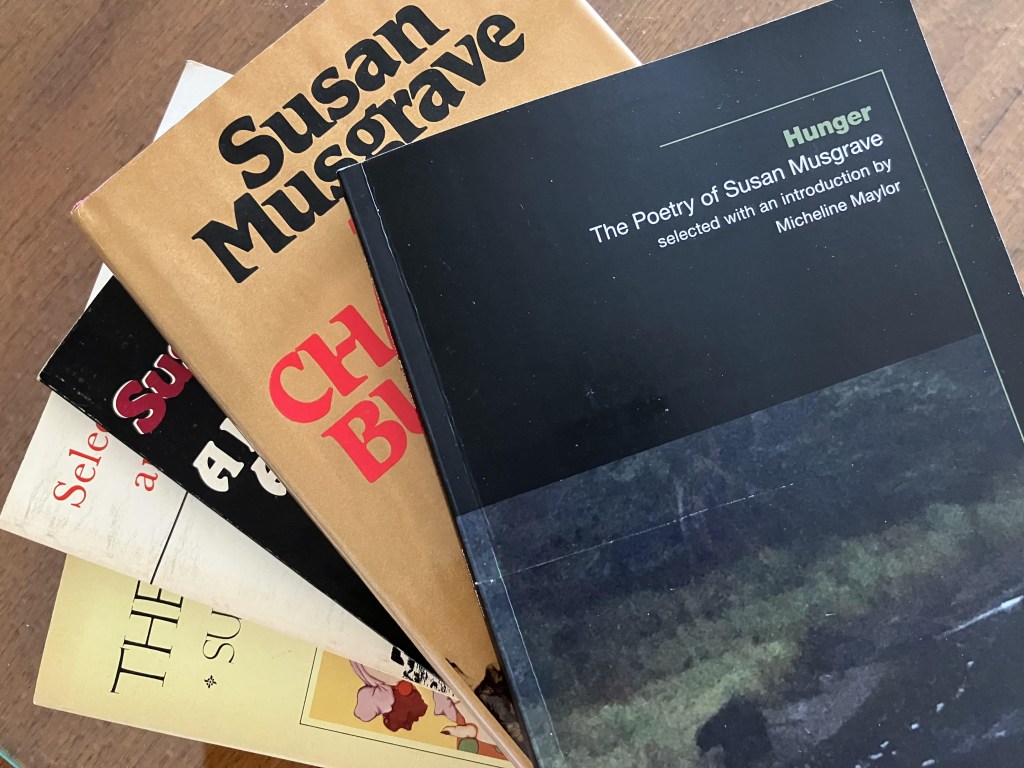
The Impstone by Susan Musgrave (McClelland and Stewart Limited, 1976)

Selected Strawberries and Other Poems by Susan Musgrave (Sono Nis Press, 1977)

A Man to Marry, A Man to Bury (McClelland and Stewart Limited, 1979)

The Charcoal Burners: a novel (McClelland and Stewart Limited, 1980)

Hunger: The Poetry of Susan Musgrave selected by Micheline Maylor (Wilfrid Laurier University Press, 2025)

Only five of the 35 books by Susan Musgrave. Wow!
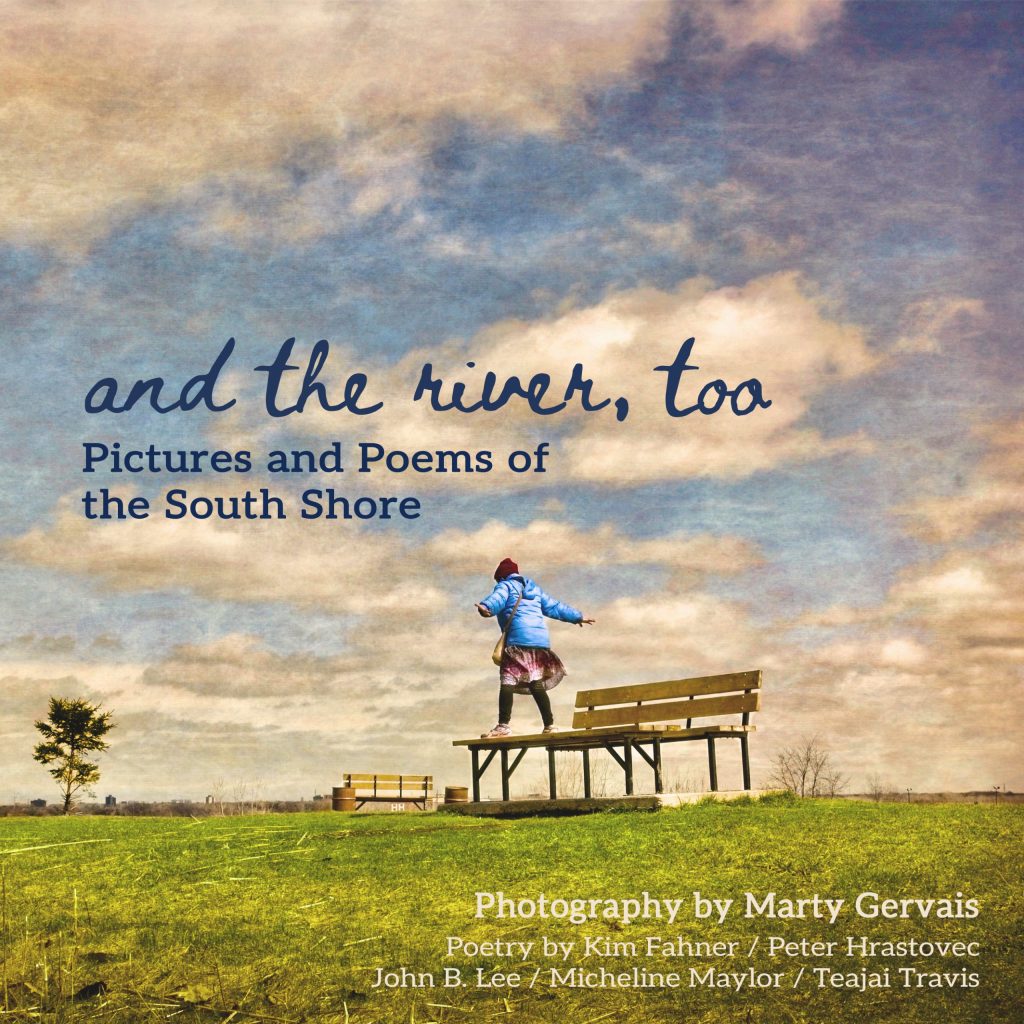
What I’m Reading: and the river, too: Pictures and Poems of the South Shore

Photography by Marty Gervais, Poetry by Kim Fahner, Peter Hrastovec, John B. Lee, Micheline Maylor, Teajai Travis (Black Moss Press, 2025)

Like Windsor, the photographs in and the river, too are gritty, bold, beautiful; each is a story; each is a poem. Music overflows the poetry – perfect since we grew up on Motown, on the jazz that crossed the river, on our own homegrown – and each poem also suggests the grit and sensuous experiences that connect the poets to the place.

Some of my favourite lines include:

“I am a crow, caught on lift of current, restless and open.” (“Migration Patterns,” Kim Fahner)

“…but the guy-wires of the bridge 
appear strung in pairs 
like piano wires / carrying the music of the wind”
(“The Gordie Howe International Bridge,” John B. Lee)

“A smooth descent down a fretless spin.” (“Honey Suckle Steel Beneath a Blue Sun (Jazz)” Teajai Travis)

“Here in the alley,” a phrase repeated, beginning four of the seven stanzas, creating music and echoes (“Here in the Alley, Peter Hrastovec)

“I’m made from rivermud, muck-sludge with scrap metal,
truck traffic, human traffic, tunnel traffic, bridge traffic
Georgian buildings turned to falafel shops. A wreckage
[…]
(“Ground Zero: Ouellette and Riverside,” Micheline Maylor — I love the rush of it, the music of it, the truth of it)

Black Moss Press, 2025

What I’m reading: The Moon that Turns You Back by Hala Alyan

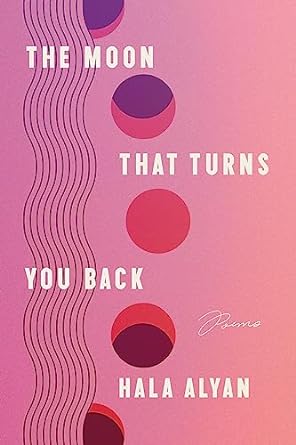
The Moon that Turns You Back by Hala Alyan “blurs boundaries and borders between place, time, and poetic form” (cover copy). The poems are beautifully rendered and pulse with emotion; they look inside and out into the world. This poem, “Half-Life in Exile” is representative of a major theme in the collection, but the form and structure of the poems varies from rather traditional to experimental. I’m loving the read.

The Moon that Turns You Back by Hala Alyan (Ecco, 2024)

Other reviews under the “witness” umbrella that may interest you include:

Almond Blossoms & Beyond by Mahmoud Darwish, trans. by Mohammad Shaheen (here)

Songs of Exile by Bänoo Zan (here)

Alien Correspondents by Antony Di Nardo (here)

[…] by Fady Joudah (here)

A Crash Course in Molotov Cocktails by Halyna Kruk (here)

from Sarajevo with Sorrow by Goran Simić, translated by Amela Simić (here)

Poetry is Blood by Keith Garebian (here)

The Sleep Orchard: A Response to Arshile Gorky by Amy Dennis (here)

Review of Hollay Ghadery’s Rebellion Box

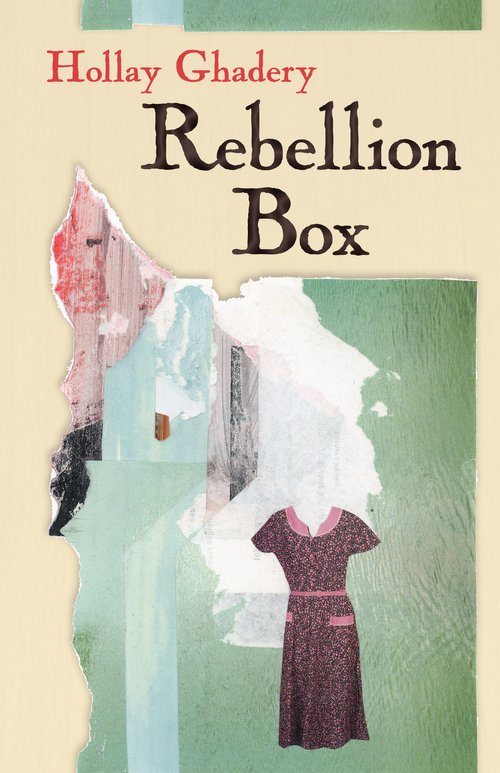
Perhaps one shouldn’t judge a book by its cover, but the cover of Rebellion Box is revealing. The illustration is dominated by a housedress trimmed in pink upon a paint-peeling background exposing an opaque scene that leads the eye to another and another. This, in a way, is what the poems do in Ghadery’s debut collection.

Opening to the first poem, “Postcard, Santa Maria,” we meet a girl, sensuous beside a pool, but then, a disclaimer: “I’m not that girl / anymore.” This, followed by the surprise “the cervix / of a fifteen-year-old, / my doctor says. / Not bad / for four kids” (1-2). And so, we are introduced to the speaker of many of the poems that follow, and a dominant theme of the collection is identified. Who is this woman who once lay by a pool in sunshine, who is a mother, who we will learn is biracial and bicultural, who attends historical talks, who writes poetry “to get [her] thoughts straight,” as suggested in an article Ghadery published in The New Quarterly.

In that article, Ghadery refers specifically to the title poem (45-46), a sestina, in which form controls and shapes the poem – a box as it were, for sharing the 1837 love story of Joseph, prisoner of the rebellion, and his love, Mary. The form disciplines Ghadery, allowing her to reveal the “mores and values” of the time in a tight, coherent way. Those mores and values are a constraint for the protagonist who cannot approach Mary directly, and I wonder, as I read through the collection time and again, if the Rebellion Box hasn’t become a metaphor for the constraints experienced by the poet herself. 

To read the entire review that is published by FreeFall Magazine, please click here.