On the shoulder, waiting for a break, / me and this sleek crow, its cape / tucked and trim. (“Crushed”)
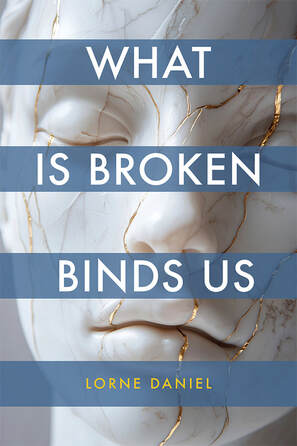
In What is Broken Binds Us, Lorne Daniel’s fifth poetry collection, he explores brokenness and the binding of lives within family and across generations and continents. The poems explore the shattering of bodies and minds, the brokenness of a society that condoned slavery and the racism that continues, and the diaspora that is reality for so many of us. Through a kind of kintsugi (the Japanese art of repairing pottery with gold, which emphasises the cracks rather than hiding them) Daniel names the shattering with poignancy, resilience, and beauty.
The collection is skillfully organized; the poems in each section closely relate in subject and theme. But there’s also a weaving that brings the overall threads together like a tapestry.
The first poem of the first of the seven sections in What is Broken Binds Us serves as a prologue poem, introducing many of the themes in the collection in Daniel’s clear, accessible, poetic voice. In “Lessons in Emergency Preparedness” (a three-part poem), we meet a younger poet/speaker Proudly / poor and adulting hard, a husband and new father, who would clamber onto my rusted one-speed / with its great sweeping handlebars / —wide as albatross wings— / and wheel urgently to the Office / of Emergency Preparedness. Daniel takes us into the workspace and introduces the team. There is an off-hours emergency, but the Emergency Preparedness friends have
…No plan. I checked my wrist for some reason, then the wall clock, the school gym. It was 12:25, the second hand still, improbably, moving.
Daniel captures an existential reality, our helplessness when the world we know turns upside down. And he does this with hints of humour, surprise, and irony.
“Crushed” is the transition between the first poem, in which death appears, and the following poems in the section that explores the broken body. It contains one of my favourite images: On the shoulder, waiting for a break, / me and this sleek crow, its cape / tucked and trim. The triad of danger, fear and survival, which theme the collection.
In the second section, Daniel broadens the scope: It is easy / to dip into purse and wallet, / give back the money. Cede the land. The bullets do not go easily / back into the barrel… (“Giving Back the Dream”).
There are echoes of Joni Mitchell in “What Has Taken Place”:
…No plan. I checked my wrist for some reason, then the wall clock, the school gym. It was 12:25, the second hand still, improbably, moving.
Daniel captures an existential reality, our helplessness when the world we know turns upside down. And he does this with hints of humour, surprise, and irony.
“Crushed” is the transition between the first poem, in which death appears, and the following poems in the section that explores the broken body. It contains one of my favourite images: On the shoulder, waiting for a break, / me and this sleek crow, its cape / tucked and trim. The triad of danger, fear and survival, which theme the collection.
In the second section, Daniel broadens the scope: It is easy / to dip into purse and wallet, / give back the money. Cede the land. The bullets do not go easily / back into the barrel… (“Giving Back the Dream”).
There are echoes of Joni Mitchell in “What Has Taken Place”:
what has taken place here where roots of Garry oak are paved over? what stories have been told of this place? what does placemaking mean where place has been taken? taken over meadow turned city street bearing the name of a Spanish naval officer
Daniel is a questioning poet; he urges us to think, to consider what we’re doing, what we’ve already done.
In “The Family Name,” the third section of What is Broken Binds Us, the poems dig into heritage and migration, the roots of who we’ve become and the lonely search of those in the diaspora. In Scottish English, to ken means to know, to see, to understand. The family immigrated to Canada from the U.S. and before that from Scotland. In “Kenning,” the family makes a pilgrimage to Charleston, the Magnolia Plantation, to confront slavery. “In the Family Name” is one of the most powerful poems in the book. Daniel writes,
Stories, grief, celebration. Distance, absence, loss. Where to start, as a Daniel bearing the name of an English enslaver… […] …returning to the ties, to touch what binds, to wonder what releases the knotted, twisted, tangled.
In the fourth section, we return to the immediate family and the infant introduced in the first poem, now a sleepwalker, a three-year-old talker: Well into the night, he swings / from story to song. The halting rhythms / hypnotic as his voice rises and rises / until with one high note he slips away. In succeeding poems, he literarily slips away into chaos. Somehow Daniel writes these poignant poems without pathos, without sentimentality.
The theme of uncontrollable chaos lingers in the fifth section,
Please click The Temz Review to read the balance of the review. This is where the review is published.
“Weathering Water-Wave Theory,” Consilience Journal, Columbia University, forthcoming Fall, 2025 — The editors wrote: “Our reviewers enjoyed reading your poem, which highlights moments when opposing forces come together—whether in nature or within ourselves. We also admired the choice of words, the use of enjambment and punctuation, and the masterful use of meter.”
“Unmarked: A Lament for the Children Buried in the Unmarked Graves of Residential Schools,” Strong Hands Stop Violence poetry anthology, ONWA, Vol. 9 (December 2025)
“On that Forbidden Evening,” “Willow Dream,” and “Albinoni’s Adagio,” Live Encounters, Volume Four, 16th Anniversary, November-December 2025
“Weathering Water-Wave Theory,” Consilience Journal, Columbia University, (2025-09-22)
“She Sings Only at Twilight,” “Company of Wayfarers,” “A Blizzard Blows,” “Phantasm,” and “Beloved,” Lothlorien Poetry Journal Volume 28 (print and online) Sept. 30, 2023).
“Musical Invocation” poem profiled and read/recorded, Jerry Jazz Musician (September 2023).
“Journey,” “Ashes,” This Wine into Water, a chapbook anthology (Forward by Lorna Crozier, Wintergreen Studios Press, December 2018.)
Earlier writing was published in literary journals including the Fiddlehead (#130 Summer 1981) Descant (#32-33 1981) and Northward Journal (#20 June 1981) as well as anthologies such as The Wisdom of Old Souls (2008), Grandmothers Necklace (2010), Close to Quitting Time (2011). (Some early poems published as Kathryn Deneau.)
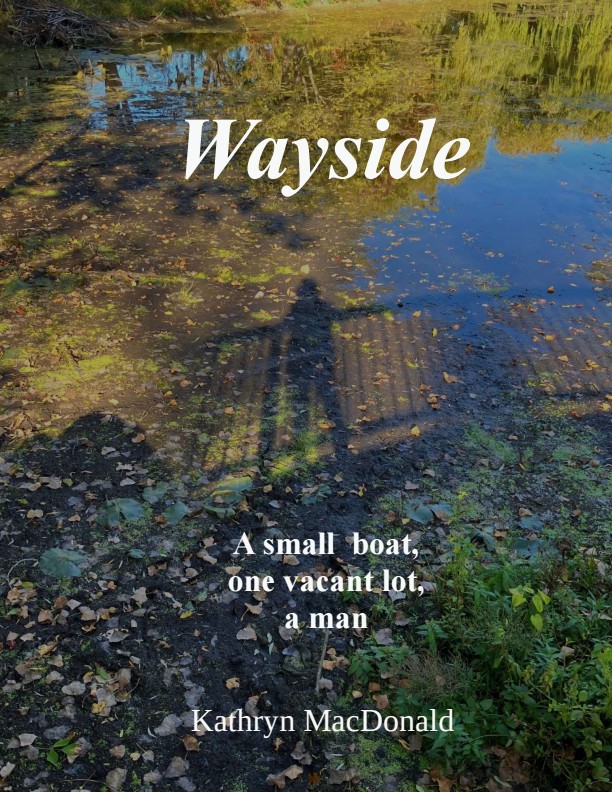
Review of Wayside: a small boat, one vacant lot, a man by Antony Di Nardo (The Miramichi Reader)
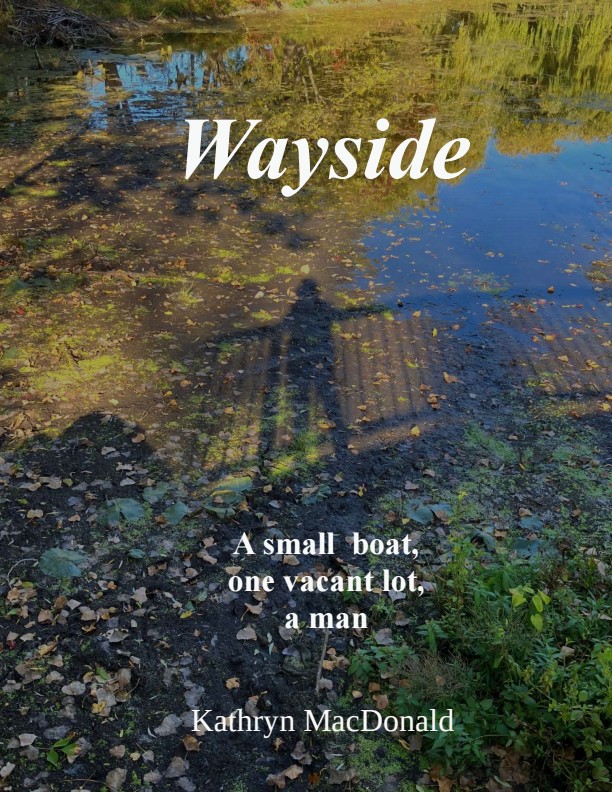
Some words, when you string them together, defy their simplicity and create a world of their own. They take on the voice of their writer and that writer’s moment in time. And where mind and matter intersect, a singular world of genuine emotions, the poet’s “objective correlative,” comes to life on the page. Such is the art of Kathryn MacDonald. Hers is a vivid, intimate world, where Nature flourishes and serves as the source of her language, giving us Wayside: A small boat, one vacant lot, a man. Twenty-one poems. Twenty-one facets of a poet’s lyrical “I.”
These poems, both by design and content, are watercolours. Oils, pastels, hard acrylics, are made of edges, rely on borders, illusions based on blocks of space. I generalize, of course, but for me, watercolours blur the lines between what’s real and what is felt. They soften those distinctions between our inner and outer worlds and, in so doing, suggest sensations that intensify the human experience. Each poem in this collection has been rendered that way, with brushstrokes dipped in water, light and words. They evoke a faithfulness to life steeped in love and friendship despite the grief and sorrow of loss. And all of this MacDonald achieves without the gush of sentimentality.
These are wonderful poems. Literally, full of wonder and acceptance of a poet’s right to rearrange feelings into words. Her images, as one would expect, are exquisite. She paints tableaux that manifest the presence of another in their absence. She writes: “his lips brush mine when we part / leaving my blue bicycle wobbling.” So much is said in those few words: minimum of brushstrokes not only illustrate a fleeting moment but paint a powerful human emotion. Her use of “wobbling” – after a succession of alliterative b’s – is a master stroke of lyricism, its sound and sense depicting a feeling I associate with the thrill of uncertainty and stirrings of physical attraction. A heron “stands on willow-whip legs,” appears as a Modigliani figure that “strolled / along the dock” and becomes “a small grey man – / before taking flight.” I am awe-struck by that compression of a human figure and a giant bird in flight, the two synchronized to evoke the beautiful contradictions of Nature’s work. And MacDonald’s craft.
The skies are sometimes grey in Wayside. There is illness and tragic ultimatums. That “small grey man” who sails the Bliss, a small boat, must also face its loss. As does the painter of these poems who “listens as his cane shatters silence” and is resigned to acknowledge that “[c]ells in his body blossom multiply.” Loss is tragic and death inevitable, but life goes on and the poet puts that feeling into words:
Air sits heavy, burdened with coming rain. A tear breaks in the flock of cumulous clouds and light slips obliquely into the river’s mouth, slips onto moon-round lily leaves where flowers will one day bloom.
I so admire the cadence and sway of such fluid lines – I can’t say enough about their music, their subtle, almost imperceptible, alliterated syncopations! These lines are a testament to Kathryn MacDonald’s vivid way with words, both pictorially and sonically.
In this chapbook, kayaks resemble “elongated sunrises.” Reflections float “downriver / downriver / to the sea.” Dragonflies are dragons and “soar / in six directions, / hover / like hummingbirds.” A kiss is “as subdued as the gauzy sky, still as the mouth of the river.” Birds and flora, waterfront creatures populate these poems. And turtles. Turtles “especially.” MacDonald writes “I wonder if we were to decipher / the map carried on their backs / what journey might be revealed.” Her metaphors come naturally. They are both the light and brushstrokes of these poems. Here’s a scene she frames to portray dusk at the end of a summer’s day:
Day slips toward July’s long dusk the quiet hour when mallards and geese return to their nests, the great blue spreads his wings and flies to the willow’s shadows, an osprey circles toward its platform of sticks, the moon-pale swans glide across the bay.
This scene sets the mood for what transpires between two people when one must leave for good. I’ve never liked the term “pathetic fallacy” to describe the way poets personify their natural environment, it seems demeaning to me. Regardless, MacDonald’s use of this device gives us lines like these: “My sorrow wreaks havoc / with fast-falling snow / as I kick through drifts / that bury the river trail / to him.” She compresses both a narrative (her friend is dying) and an intense feeling (her sorrow) in a tightly woven yarn of diction, voice and theme. As for the dynamics of form and text that structure these poems, they are, in the words of Emily Dickinson, like Oars divide the Ocean, / Too silver for a seam.
MacDonald’s art comes with a clear sense and understanding of what makes poetry, and how to translate emotion into words. Wayside is evidence of that. Pick up the book, open it to any page, there you’ll find a watercolour of metaphors, imagery and soundscapes that tell a story of a small boat, one vacant lot, a man … and, not to forget how books like these really come to be, of a poet’s working mind.
Details
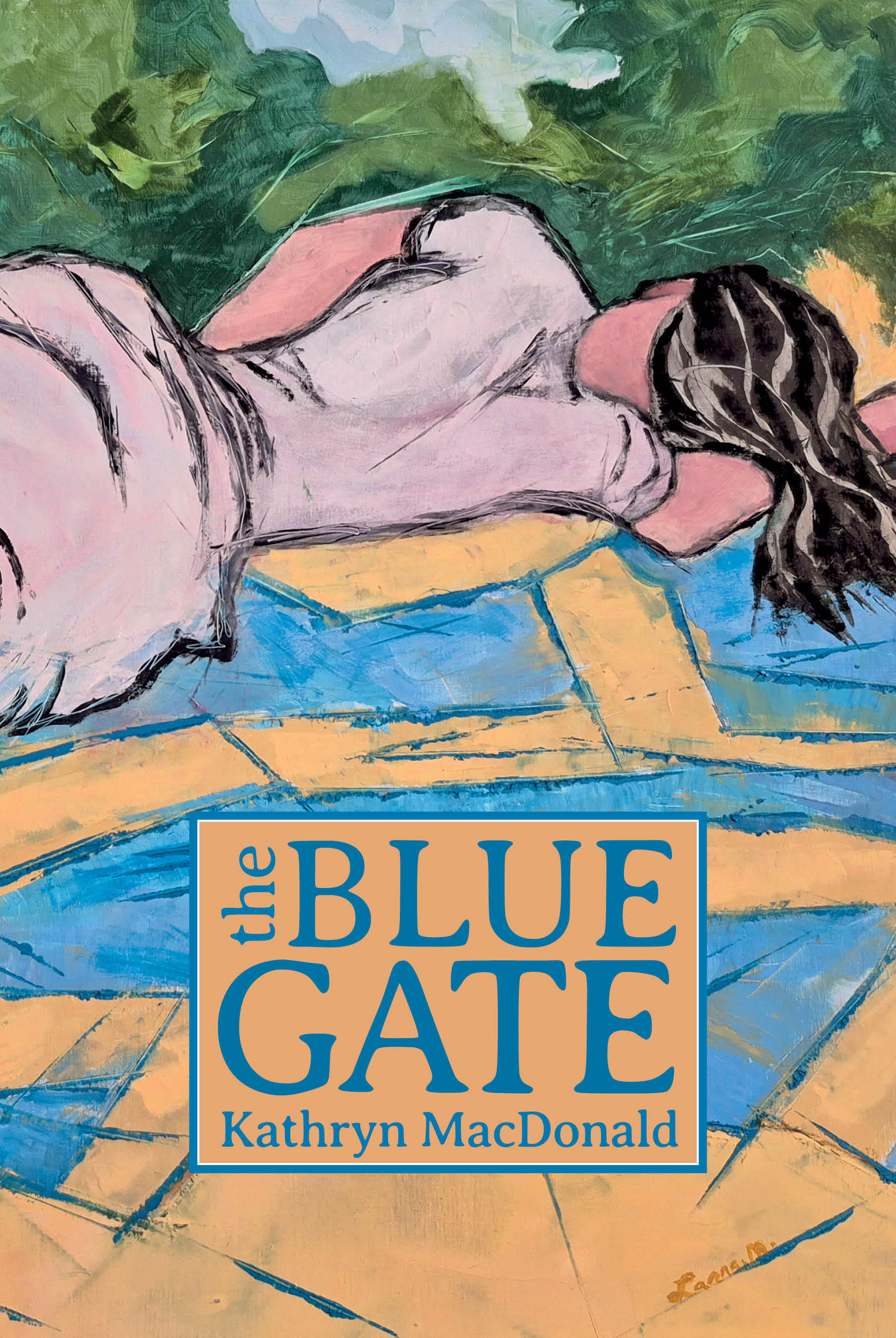
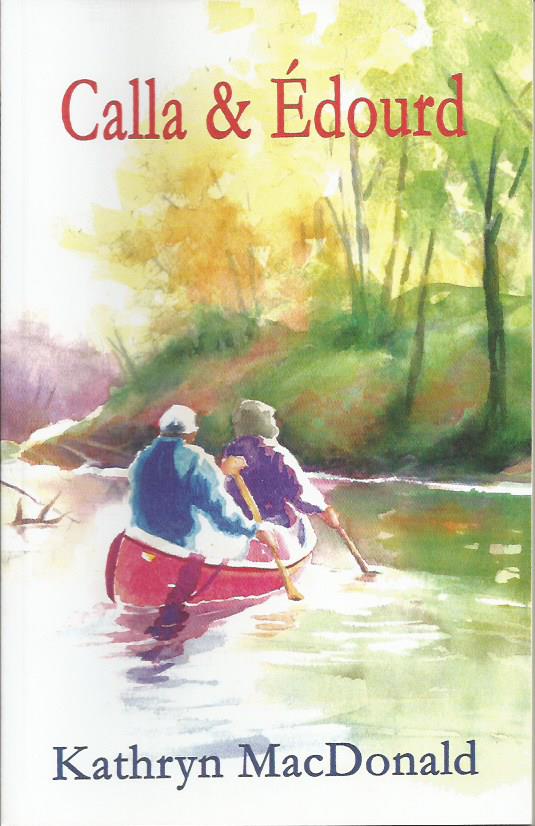
Kathryn MacDonald’s poetry has been published in Room, FreeFall and other Canadian literary journals and anthologies, as well as internationally in the U.K., U.S., and other countries. Her new poetry collection, The Blue Gate is available this Spring 2026 (Frontenac House). Kathryn has three chapbooks: Wayside: a small boat, a vacant lot, a man (Big Pond Rumours Press, 2026), Liminal Spaces , a chapbook anthology of ekphrastic poetry by Kathryn and three fellow-poets (Glentula Press, 2025), and Far Side of the Shadow Moon: Enchantments (Glentula Press, 2024). Her first full poetry collection, A Breeze You Whisper: Poems, and a novel, Calla & Édourd were published by Hidden Brook Press (2011, 2009).
Antony Di Nardo lives in Cobourg, Ontario and is the author of seven books of poetry. His most recent, Forget-Sadness-Grass (Ronsdale Press 2022), was a CBC Books poetry pick. His suite, “May June July,” won Exile’s Gwendolyn MacEwen Poetry Prize and was nominated for a National Magazine Award. “Among the Boughs,” first published in The Fiddlehead, will appear in this year’s Best Canadian Poetry anthology.