
BOOK REVIEW: Dani Netherclift’s Vessel: The Shape of Absent Bodies

Vessel: The Shape of Absent Bodies is Dani Netherclift’s first book, a hybrid in content and form. We’re told that the elegiac and lyrical narrative is rooted in the 1993 drowning deaths of Netherclift’s brother and father. Much of the content, particularly in the middle section stems from the author’s research, which she calls “the creative artefact of my PhD” (179). This, along with images of rumpled envelopes link the author’s narrative to her grandmother’s, along with articles photocopied from newspapers of other drownings. These weave Netherclift’s experience with those of others. She probes literature, science and magical thinking, returning time and again to the day of the drownings, to memories (hers and others), to official records, to a search for herself trapped in absence.

Place and the coincidence of familial experience are essential to the unfolding of the storyline. We’re given a hint of this with the first lines of the largely prose poem (these blocks are centred left-right on the page, justified with wide margins):

The author is witness, and also conflicted, ambiguous.

I have a collection of one-hundred-year-old
envelopes addressed to my great-grandmother,
sent from the trenches in France and Belgium
in World War I. The address the envelopes
were sent to is the place my father and brother
departed from on the day they died. This land,
Ngurai-illum Wurrung Country, forty acres,
shaped like a lopsided house turned on its
side, was colonised by my Scottish ancestors
one hundred and seventy years ago.
These envelopes are empty now.

[…]

… I witness my father and brother drown, minutes—perhaps only seconds—apart (11).

I sayThough I witnessed every moment
of their drownings
,

but I didn’t witness every moment, only the
parts I could see
.

I say—I saw them die,

but I’m sure their hearts were still beating the
last time I saw them.

I say—I’m sure (23).

Netherclift contemplates the way awareness creeps up on a person. Invoking the death of a great-uncle in New Guinea, she notes her great-grandmother’s body “had been marked / indelibly with absence” (68). These disparate linkages run constantly through the book. Yet, Netherclift’s skill creates a cohesive weaving, moving from example to example of the surprise of death and the wounds it leaves on the living. In example after example, there is disjuncture between what happens in the physical world and what happens to those affected. Netherclift gives us the example of Schrödinger’s cat – the 1935 experiment that highlights the unknown time in-between (69).

For a period after a person dies, the mourner’s
brain conjures an expectation to see their dead
loved one walking in through familiar doors….

To read the full review, please go to The Temz website where the review was published. Click here.
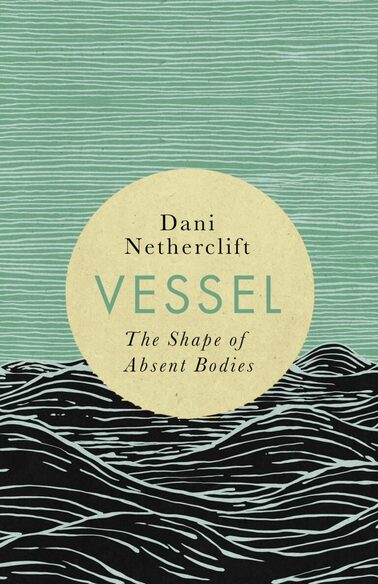
Assembly Press, 2026

Reading “What They Wanted” by Donna Morrissey as a Writer

I remember clear as yesterday those last days in Cooney Arm, the sea dying around us and taking Father’s spirit with it. And my, but he had fought. Long after his brothers and the others left he’s stayed, netting cod, netting salmon, spearing flatfish, hauling crab-pots, trapping eels and rabbits, hunting seals and turrs and boo birds, and landing capelin and squid and all else the sea hove at him.

What They Wanted by Donna Morrissey explores loss of home and all that means, of becoming lost while chasing survival. Memories haunt her protagonist and then one day she asks herself,

What of memory is truth? It was a staggering thought, and for a moment I felt a great fear, like those split seconds sometimes upon awakening when all sense of self is still caught back in the nether world of sleep and the eyes alone are opened onto the blankness of a room without memory. I clutched my arms around myself, needing to feel the solidity of flesh and bone, like the ghosts from Cooney Arm whose lives have been vanquished into time, leaving behind fragments of soul clinging to wood, no longer knowing what, if any of this, is real, and frightened of their invisibility.

In Newfoundland, Sylvie—a sister, daughter, and granddaughter— confronts “what is and what could be.” After a time, she follows her quiet brother Chris to the oilfields of Alberta. There, they face a different kind of fear from the old ghosts and guilts of childhood. Sylvie:

If I’d learned anything from this camp, it was that fear doesn’t necessarily present itself in well-defined situations; more often it’s that darker shade of red flowing through our veins, tinting our views and no doubt stripping us of the courage to make decisions along the way.

In Newfoundland, the graves and past was tangible, but in the oil fields of Albert, the fears were elusive shadows. Yet, decisions are made and consequences unfold.  To say more would be to give too much away and spoil your reading.

For the writers among us:

  1. As you read, pay attention to the details of place and culture. See how these play into and reveal character.
  2. Notice how Morrissey creates situations that, in turn, create the need for decisions, and notice how decisions often carry unforeseen consequences.
  3. Notice how she controls tension, keeping us turning pages.
  4. Notice also how an undercurrent develops, a movement beneath the thread of the surface story.
  5. All these things together lead to a story that we believe; it feels authentic.

Morrissey uncovers the human cost of loss while also revealing the power of family and love and  she does this within the specifics of a time and place that we recognize as also universal. It is what we aim for as writers.

If you have read What They Wanted—or when you read it—please share your thoughts on how Morrissey achieves moving the personal (particular) time, place, and situation of the novel into the universal so that we can each relate, regardless of whether we share the Newfoundland experience of dislocation.

60 What They Wanted

Available through your local bookstore or online: What They Wanted