
BOOK REVIEW: Dani Netherclift’s Vessel: The Shape of Absent Bodies

Vessel: The Shape of Absent Bodies is Dani Netherclift’s first book, a hybrid in content and form. We’re told that the elegiac and lyrical narrative is rooted in the 1993 drowning deaths of Netherclift’s brother and father. Much of the content, particularly in the middle section stems from the author’s research, which she calls “the creative artefact of my PhD” (179). This, along with images of rumpled envelopes link the author’s narrative to her grandmother’s, along with articles photocopied from newspapers of other drownings. These weave Netherclift’s experience with those of others. She probes literature, science and magical thinking, returning time and again to the day of the drownings, to memories (hers and others), to official records, to a search for herself trapped in absence.

Place and the coincidence of familial experience are essential to the unfolding of the storyline. We’re given a hint of this with the first lines of the largely prose poem (these blocks are centred left-right on the page, justified with wide margins):

The author is witness, and also conflicted, ambiguous.

I have a collection of one-hundred-year-old
envelopes addressed to my great-grandmother,
sent from the trenches in France and Belgium
in World War I. The address the envelopes
were sent to is the place my father and brother
departed from on the day they died. This land,
Ngurai-illum Wurrung Country, forty acres,
shaped like a lopsided house turned on its
side, was colonised by my Scottish ancestors
one hundred and seventy years ago.
These envelopes are empty now.

[…]

… I witness my father and brother drown, minutes—perhaps only seconds—apart (11).

I sayThough I witnessed every moment
of their drownings
,

but I didn’t witness every moment, only the
parts I could see
.

I say—I saw them die,

but I’m sure their hearts were still beating the
last time I saw them.

I say—I’m sure (23).

Netherclift contemplates the way awareness creeps up on a person. Invoking the death of a great-uncle in New Guinea, she notes her great-grandmother’s body “had been marked / indelibly with absence” (68). These disparate linkages run constantly through the book. Yet, Netherclift’s skill creates a cohesive weaving, moving from example to example of the surprise of death and the wounds it leaves on the living. In example after example, there is disjuncture between what happens in the physical world and what happens to those affected. Netherclift gives us the example of Schrödinger’s cat – the 1935 experiment that highlights the unknown time in-between (69).

For a period after a person dies, the mourner’s
brain conjures an expectation to see their dead
loved one walking in through familiar doors….

To read the full review, please go to The Temz website where the review was published. Click here.
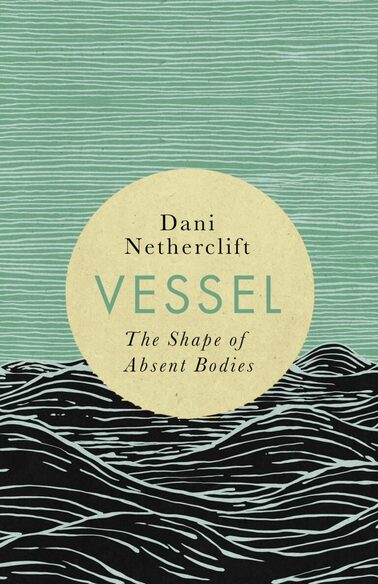
Assembly Press, 2026

BOOK REVIEW: The Character Actor Convention by Guy Elston

I’d sit with Napoleon in exile
and chat casually. (St. Helena)


The Character Actor Convention by Guy Elston brings together sharp, edgy, quirky voices in which the actor/poet speaks for the historic and the legendary, for a songbird, oxygen, and a board of directors. On first reading of Elston’s collection, thoughts of lad lit, then theatre of the absurd surface (Six Actors in Search of an Author?), but these poems are neither superficial or existential. A second reading challenges the first impression of witty lightness. The poems imagine; they reimagine, and they question. Elston’s “voice” is clear, clever, and has something to say.

The collection’s initial poem, “The Stake,” begins: “The night before, / and Joan is certain. As ever.” Like the absurdist existential authors of the 1950s, the ending mirrors the beginning: “Oh, I’ll burn, Joan laughs. / I do every time. Your move.” The magic lies in the couplets between. The chess-playing voice asks: “Do I want to make her wonder?” In the fifth couplet Joan asks: “How can these cassocked frauds judge me, / Joan sighs. Are you like them?” The voice watches a spider. Chess, a suggestion that life and death are a game? The spider, an allusion to spider-wisdom à la Charlotte’s Web? There’s also a “fallen bishop” and much to ponder.

This prologue poem introduces key themes that thread through The Character Actor Convention. Thoughts of dying and death subtly weave through the poems, as do games. The bishop (religion) and judging also thread through the collection, as they do in “St. Helena” (21) where the voice plays cards with Napoleon:

St. Helena

I’d sit with Napoleon in exile

and chat casually.

There are more variants of Patience

named after me than any other man,

he’d mention, casually. He had a habit

of counting waves and cheating

every time we played cards.

The money meant nothing to him,

less than nothing to me.

You do know that nobody

who joins me here may leave?

he sometimes asked, while watching

the distance for sails. I dug a little hole

in the sand with my left foot.

All summer, I never told him

we don’t even have God in the future.

Joan and Napoleon aren’t the only characters that confront death. In “For a Good Time” (57), fish fly larvae “die within days.” Elston refers to other historical personalities who meet death – “eight / dead Philippes. Eleanor of Castile, / of Provence, of Aquitaine…Joan of Arc…the dead Louis’s.” But I’m struck by the fish flies – hundreds gathered on outside furniture this spring and every light-coloured surface in my river town, crunching underfoot as I walked on downtown stinking. What inspires Elston to combine fish fly larvae with these historical figures? His vision is playful, unique, and surprisingly perfect. He draws us in with the whimsy and stops us with insight and the juxtapositions of his subjects. Life is brief for both the larvae and us. Life is so brief, the voice “stop[s] gunrunning, / start[s] writing poems.”

The title poem falls mid-collection (33).

To read the full review, please click here for the link to The tEmz Review.