Last night the lake rose to meet me as I crossed. “Future Ghost” (13)
Writing “in time” with a brain tumour diagnosis is an amazing feat that Jim Johnstone does with honesty and grace. I offer a small look at the beauty and tone he achieves while writing through uncertainty.
Who can say why specific poems speak louder, but five seem to always surface with each reading, always curled up in a big old armchair – somehow comforting. Of the five, “Kracken” (43) rises to the top:
KRAKEN
Slip of the tongue, slip of the sea’s eight arms, and the whirlpool begins to compress its armour; failed spears, failed reel, a lens to enlarge the pericardial inferno threshing like an ocean
…
the wine-dark whine of the unseen.
The others among my favourites to reread over and over again include: “Invitation (Set to Summer Radio)” (53), “Three Sons” (56-57), and “Slice-Selective Excitation (Brain Scans 1-5)” (63).
The final poem “This is the End” (89-95) haunts with insight and intensity. These lines from the middle speak to the fear: “The future is as uncertain // as the body // it inhabits / and multiplies rapidly” (93).
Near the poem’s end: “The future // (heart) // heath // hearth // is coming // When it climbs through / an open window // we’ll know // it’s the end. / Ghost orchid, clover, crab- // grass grown to replace / evidence // … (94-95). The words are space openly on the pages, the future open-ended.
The King of Terror is a poetry collection to read slowly and to reread.
Available through your local bookstore or online: The King of Terrors. Jim Johnstone, Coach House Books, 2023, ISBN 978 1 55245 470 1
Only the squelch of her footfalls, / slap of small waves, wind ruffling. Still / Corot was with her and took her up…. [“A Woman in a Painting but Not So,” 17]
Earlier this fall, I reread The Sparrow: Selected Poems by A. F. Moritz (Anansi, 2018) in preparation for an opportunity to join the poet and a small number of others to discuss our poetry, a wonderful privilege provided by Third Thursday Reading Series (Cobourg, Ontario). That evening Al Moritz read from his newest collection, Great Silent Ballad.
I had read a review by Colin Carberry that was posted on The High Window blog (August 1, 2024). I have now read Moritz’s newest collection more than once. However, I’ve decided to share The High Window’s review because I can’t do better than Colin Carberry. Even the poems that he discusses as favourites are also favourites of mine. Nevertheless, I would like to mention two additional poems.
Great Silent Ballad contains a section that reflects on social issues (Carberry discusses “The Tawer” and the idea of exploitation and restitution.) Another poem from the section of that name is “The Tradition” (115). I like the poem for different reasons on different readings, always with an undercurrent of sadness that haunts. It suggests to me the impossibility of rising above subjugation and of Isobel Wilkerson’s book Caste: the Origins of our Discontents.
The Tradition
He descended to the dead, wrapped an old towel around his waist, cooked the soup, manhandled the huge tin vat to the trestle table, ladled into bowls, handed to hands, listened to lappings and suckings, watched sad eager lips. So my grandmother did the same.
I’ll mention one more favourite that Carberry doesn’t, “Would have Taken Up” (107-108). Like other poems at the end of the collection, the poet reflects, writes a lament. It begins: “I rise, the sun too. / It passes over and I work. / I work and it passes farther.” Time goes on. The poet asks, “What have I done”? And at the end:
…O if I’d written her what I wanted, everything that composed itself in my heart, a sung world as glorious as this one in a moment of thought, it would have taken up my whole day. Sweetly, And then: sleep. It would have taken up all my life.
It’s a pensive and thoughtful poem on many levels, while suggesting that while one focuses on work other things are missed. As in my previous review of still arriving by Bruce Kauffman, Moritz is a poet of a certain age, and perhaps this reflection (even if imagination and not a personal experience) does come through in the collection. What I haven’t mentioned is the boyhood section of Great Silent Ballad: buy or borrow the book and give yourself a treat.
Great Silent Ballad is a pleasure to read. The collection is Moritz’s twenty-second. These poems demonstrate craft, passion, thought, and so much more. Enjoy.
Great Silent Ballad by A. F. Moritz (Anansi, 2024) is available through your local bookstore or online (ISBN 978-1-4870-1296-0).
I wish I’d had a lifeline to throw, / a silken cord for her safe passage back through time. – “Passage” (41)
Openwork and Limestone by Frances Boyle is a collection of poems to be read carefully. Boyle draws on many sources for inspiration. Her subjects include history, family relationships, art, nature, time/space, and five fascinating poems about Lil. But thematically, the collection is not as scattered as the range of subjects suggests. A line in the prologue poem, “Inhumed,” attunes us to a key theme – posed as a question that runs throughout the collection: “What flows unseen beneath our lives?” – holds it all together.
I am always fascinated by the way poets structure their manuscripts. Structurally, Boyle’s collection is divided into four sections, each beginning with an untitled poem.
In the first section’s prologue poem, the narrator asks: Shall I too play the scientist, / study prehistory in stone… as she imagines time-travelling with Le Guin. And she does travel, imagining Kate, my finespun grandmother who is leaving Ireland with No promise of a quick return (“That Faraway Place”). This poem includes one of the most haunting images of the collection: Kate leaves in a mothdance of handkerchiefs.
In the second section, we find tension between the blight-blasted and openings, and we continue to time-travel. In “Passage,” during the Solstice the family enters the passage tomb at Newgrange…
We squeeze along its length, shoulders brushing stone. Reaching the chamber, see chevrons, sheaves, triple
//
spirals faint-carved on rock. Charred bone-bits, soot- shadows. A tomb. Grave goods strewn on passage floor.
The daughter leaves; she couldn’t carry on. The poem concludes with …
I wish I’d had a lifeline to throw, a silken cord for her safe passage back through time.
Are you reminded of Theseus, Ariadne, and the Minotaur, the spool of thread?
In the third section prologue poem, there is a silent buzz / of hivemind hysteria and it is this section that we meet Lil. There are five intriguing Lil poems, and I want more of this fascinating character. As my mind went to Greek myth in the previous quote, here my mind leapt to Lilith, first wife of the Biblical Adam. In “Lil’s Rounds, She won’t be sucked under. She won’t drown. In “Singalong,” Lil reminds me of Yeat’s “A Crazed Girl” improvising her music. / Her poetry, dancing upon the shore.
Singalong Lil was flotsam those years, never quite sinking. Maybe she landed there by happenstance; she wasn’t jetsam, no hands delivered the overboard fling. When she flew
on her feet, whirled with spun eloquence of fleet deer, she prefigured the bringing of birdsong, commentary written in runic, best executed in daytime, accompaniment dipping at twilight to dirge.
In the final section, hope breaks through. In “Endurance,” Boyle writes: We’re hulking ships mired in frozen seas, / but spring is creaking open. The poems reconnect with earlier ones, as they do in “Tide of Limestone” in which the speaker crawls through caverns: The stuck place. / Dark matter filters us, / flows through our invisible nets. / We leave handprints, / scratches. Scant record. The final poem – “What Letting Go Means” – time travels through memory etched in glass. The speaker admonishes her sister to stand back from the fire, a plea (a hope) for the future.
Lacework and Limestone is Frances Boyles second poetry collection.
Available through your local bookstore or online: Openwork and Limestone. (Frontenac House Ltd., Okotoks, AB, 2022). ISBN 978-1-989466-43-8
“Weathering Water-Wave Theory,” Consilience Journal, Columbia University, forthcoming Fall, 2025 — The editors wrote: “Our reviewers enjoyed reading your poem, which highlights moments when opposing forces come together—whether in nature or within ourselves. We also admired the choice of words, the use of enjambment and punctuation, and the masterful use of meter.”
“Unmarked: A Lament for the Children Buried in the Unmarked Graves of Residential Schools,” Strong Hands Stop Violence poetry anthology, ONWA, Vol. 9 (December 2025)
“On that Forbidden Evening,” “Willow Dream,” and “Albinoni’s Adagio,” Live Encounters, Volume Four, 16th Anniversary, November-December 2025
“Weathering Water-Wave Theory,” Consilience Journal, Columbia University, (2025-09-22)
“She Sings Only at Twilight,” “Company of Wayfarers,” “A Blizzard Blows,” “Phantasm,” and “Beloved,” Lothlorien Poetry Journal Volume 28 (print and online) Sept. 30, 2023).
“Musical Invocation” poem profiled and read/recorded, Jerry Jazz Musician (September 2023).
“Journey,” “Ashes,” This Wine into Water, a chapbook anthology (Forward by Lorna Crozier, Wintergreen Studios Press, December 2018.)
Earlier writing was published in literary journals including the Fiddlehead (#130 Summer 1981) Descant (#32-33 1981) and Northward Journal (#20 June 1981) as well as anthologies such as The Wisdom of Old Souls (2008), Grandmothers Necklace (2010), Close to Quitting Time (2011). (Some early poems published as Kathryn Deneau.)
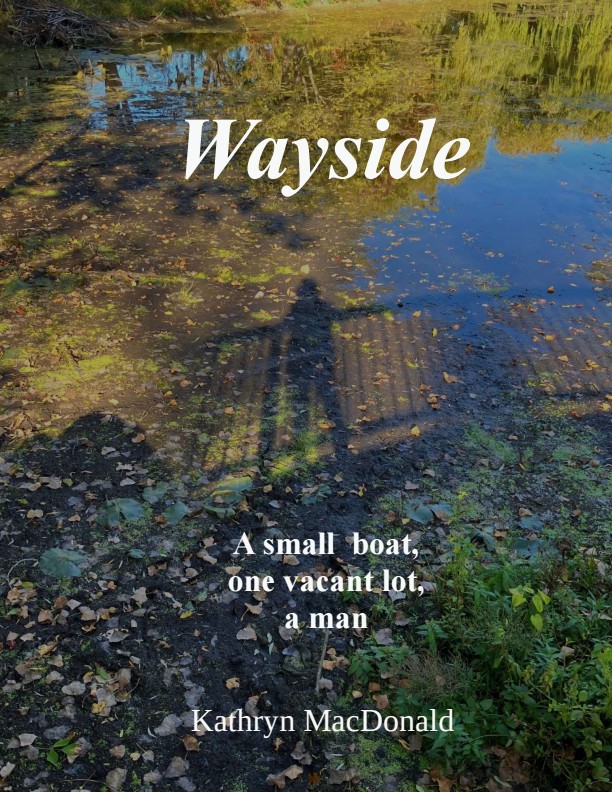
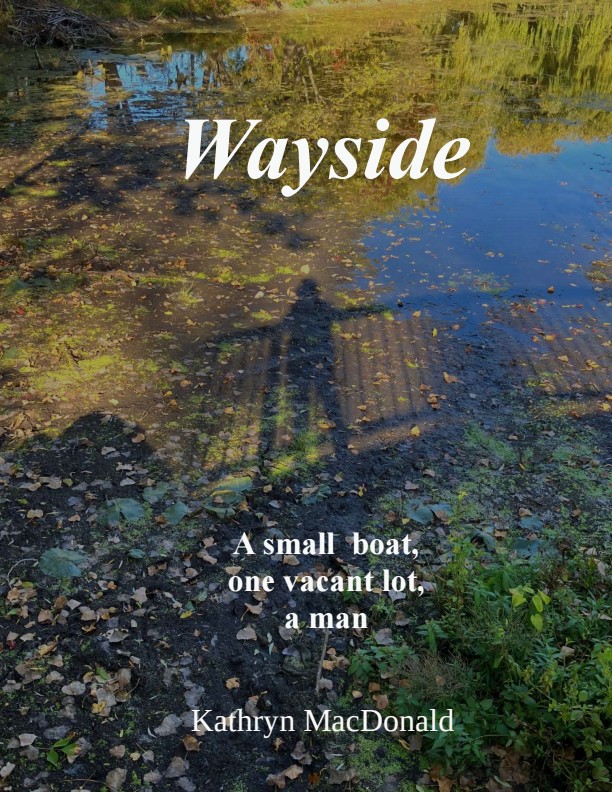
Review of Wayside: a small boat, one vacant lot, a man by Antony Di Nardo (The Miramichi Reader)
Some words, when you string them together, defy their simplicity and create a world of their own. They take on the voice of their writer and that writer’s moment in time. And where mind and matter intersect, a singular world of genuine emotions, the poet’s “objective correlative,” comes to life on the page. Such is the art of Kathryn MacDonald. Hers is a vivid, intimate world, where Nature flourishes and serves as the source of her language, giving us Wayside: A small boat, one vacant lot, a man. Twenty-one poems. Twenty-one facets of a poet’s lyrical “I.”
These poems, both by design and content, are watercolours. Oils, pastels, hard acrylics, are made of edges, rely on borders, illusions based on blocks of space. I generalize, of course, but for me, watercolours blur the lines between what’s real and what is felt. They soften those distinctions between our inner and outer worlds and, in so doing, suggest sensations that intensify the human experience. Each poem in this collection has been rendered that way, with brushstrokes dipped in water, light and words. They evoke a faithfulness to life steeped in love and friendship despite the grief and sorrow of loss. And all of this MacDonald achieves without the gush of sentimentality.
These are wonderful poems. Literally, full of wonder and acceptance of a poet’s right to rearrange feelings into words. Her images, as one would expect, are exquisite. She paints tableaux that manifest the presence of another in their absence. She writes: “his lips brush mine when we part / leaving my blue bicycle wobbling.” So much is said in those few words: minimum of brushstrokes not only illustrate a fleeting moment but paint a powerful human emotion. Her use of “wobbling” – after a succession of alliterative b’s – is a master stroke of lyricism, its sound and sense depicting a feeling I associate with the thrill of uncertainty and stirrings of physical attraction. A heron “stands on willow-whip legs,” appears as a Modigliani figure that “strolled / along the dock” and becomes “a small grey man – / before taking flight.” I am awe-struck by that compression of a human figure and a giant bird in flight, the two synchronized to evoke the beautiful contradictions of Nature’s work. And MacDonald’s craft.
The skies are sometimes grey in Wayside. There is illness and tragic ultimatums. That “small grey man” who sails the Bliss, a small boat, must also face its loss. As does the painter of these poems who “listens as his cane shatters silence” and is resigned to acknowledge that “[c]ells in his body blossom multiply.” Loss is tragic and death inevitable, but life goes on and the poet puts that feeling into words:
Air sits heavy, burdened with coming rain. A tear breaks in the flock of cumulous clouds and light slips obliquely into the river’s mouth, slips onto moon-round lily leaves where flowers will one day bloom.
I so admire the cadence and sway of such fluid lines – I can’t say enough about their music, their subtle, almost imperceptible, alliterated syncopations! These lines are a testament to Kathryn MacDonald’s vivid way with words, both pictorially and sonically.
In this chapbook, kayaks resemble “elongated sunrises.” Reflections float “downriver / downriver / to the sea.” Dragonflies are dragons and “soar / in six directions, / hover / like hummingbirds.” A kiss is “as subdued as the gauzy sky, still as the mouth of the river.” Birds and flora, waterfront creatures populate these poems. And turtles. Turtles “especially.” MacDonald writes “I wonder if we were to decipher / the map carried on their backs / what journey might be revealed.” Her metaphors come naturally. They are both the light and brushstrokes of these poems. Here’s a scene she frames to portray dusk at the end of a summer’s day:
Day slips toward July’s long dusk the quiet hour when mallards and geese return to their nests, the great blue spreads his wings and flies to the willow’s shadows, an osprey circles toward its platform of sticks, the moon-pale swans glide across the bay.
This scene sets the mood for what transpires between two people when one must leave for good. I’ve never liked the term “pathetic fallacy” to describe the way poets personify their natural environment, it seems demeaning to me. Regardless, MacDonald’s use of this device gives us lines like these: “My sorrow wreaks havoc / with fast-falling snow / as I kick through drifts / that bury the river trail / to him.” She compresses both a narrative (her friend is dying) and an intense feeling (her sorrow) in a tightly woven yarn of diction, voice and theme. As for the dynamics of form and text that structure these poems, they are, in the words of Emily Dickinson, like Oars divide the Ocean, / Too silver for a seam.
MacDonald’s art comes with a clear sense and understanding of what makes poetry, and how to translate emotion into words. Wayside is evidence of that. Pick up the book, open it to any page, there you’ll find a watercolour of metaphors, imagery and soundscapes that tell a story of a small boat, one vacant lot, a man … and, not to forget how books like these really come to be, of a poet’s working mind.
Details
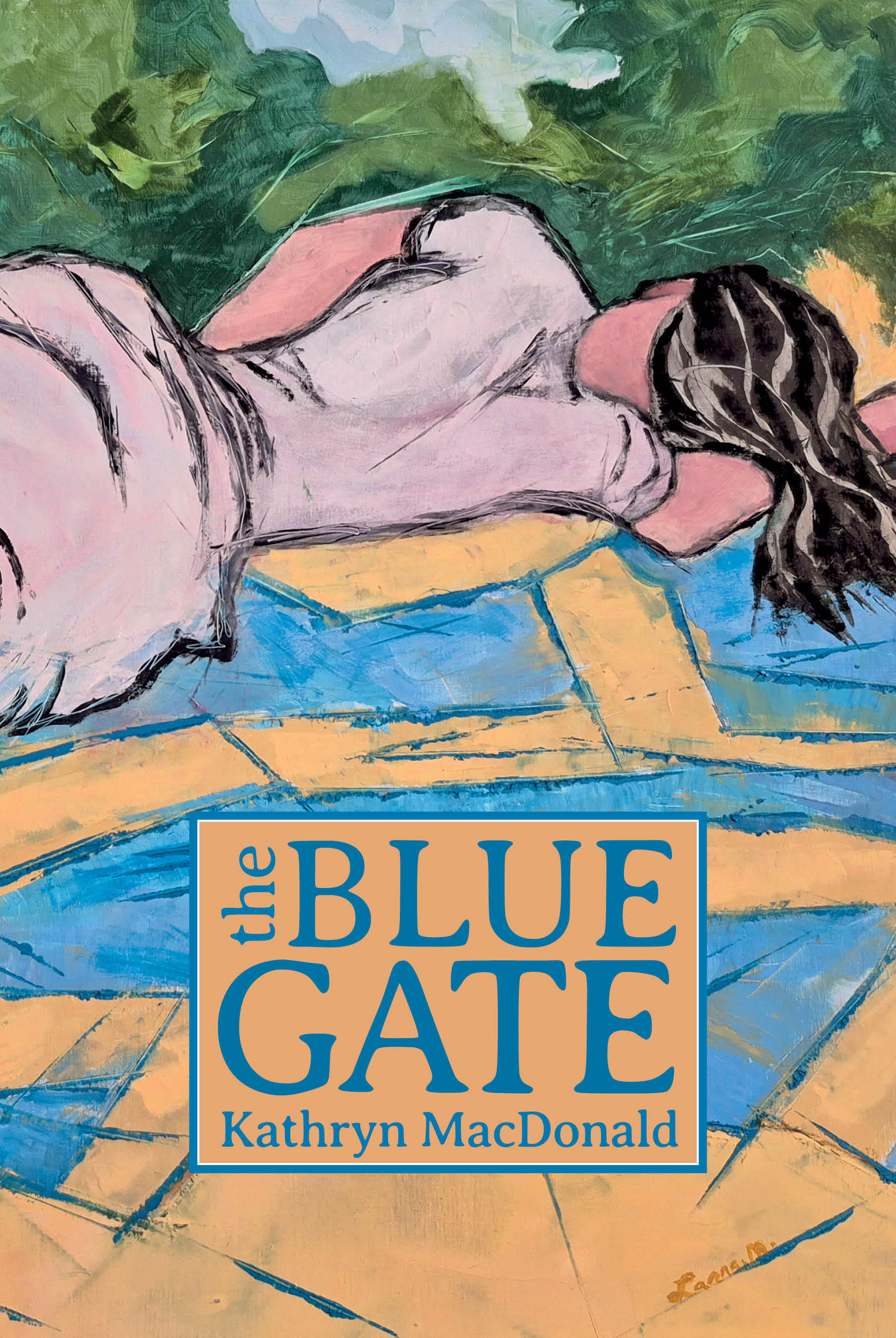
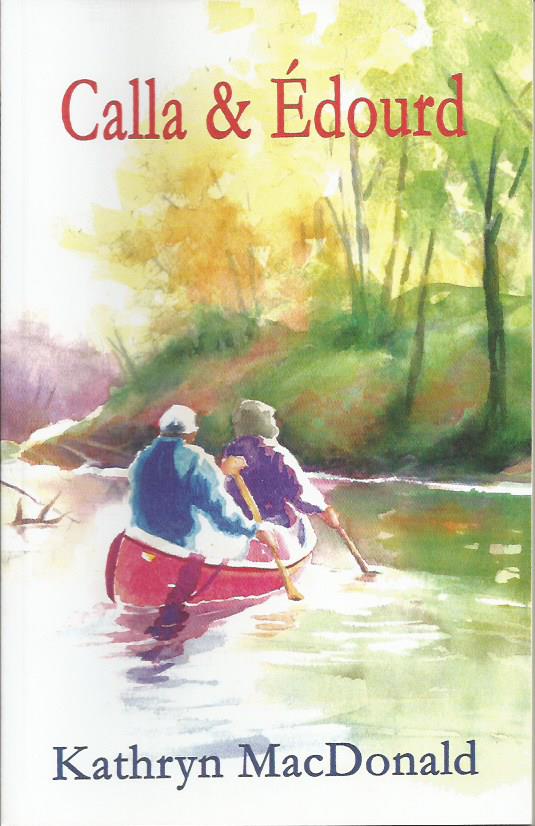
Kathryn MacDonald’s poetry has been published in Room, FreeFall and other Canadian literary journals and anthologies, as well as internationally in the U.K., U.S., and other countries. Her new poetry collection, The Blue Gate is available this Spring 2026 (Frontenac House). Kathryn has three chapbooks: Wayside: a small boat, a vacant lot, a man (Big Pond Rumours Press, 2026), Liminal Spaces , a chapbook anthology of ekphrastic poetry by Kathryn and three fellow-poets (Glentula Press, 2025), and Far Side of the Shadow Moon: Enchantments (Glentula Press, 2024). Her first full poetry collection, A Breeze You Whisper: Poems, and a novel, Calla & Édourd were published by Hidden Brook Press (2011, 2009).
Antony Di Nardo lives in Cobourg, Ontario and is the author of seven books of poetry. His most recent, Forget-Sadness-Grass (Ronsdale Press 2022), was a CBC Books poetry pick. His suite, “May June July,” won Exile’s Gwendolyn MacEwen Poetry Prize and was nominated for a National Magazine Award. “Among the Boughs,” first published in The Fiddlehead, will appear in this year’s Best Canadian Poetry anthology.
I read the whole thing all at once…each poem made me want to read the next one, and then, it was over, leaving me wanting more. [] I was totally entranced. MacDonald’s work is sensual, moving. She plays with words….The poet takes us off the page and into her mind and heart, into our own minds and hearts and beyond. (Amazon review)
ISBN 978-1-897475-66-9; Hidden Brook Press (HBP); 2011
The majority of the poems in the collection are in print for the first time, but some were previously published, including these three. The cover was created by the publisher from one of my photographs of a luna moth; the ink-brush drawings are also my creations. The book is divided into six sections: East; South; West; North; Above & Below.
“Earth,” was originally published in Ascent Aspirations Magazine (2007):
EARTH
Worms wiggle through soil and at the end of the robin’s beak.
Ants build labyrinthine passageways and a room fit for a queen’s eggs.
Below the raspberries a brown field mouse curls in her nest.
Away from the garden path under the evergreen rabbits burrow.
My fingers reach for weedy roots find mysteries buried deep.
Gravity hold more than loam to its stony heart.
“City Hunter” was originally published in Descant (1981; a prestigious literary journal that published from 1970-2015):
CITY HUNTER
I watched the jazz man reach through his horn felt his mellow breath caress my ears. His dancing fingers pushed the air around the room rippling waves of smoke broke against my flesh the current pulling toward his plunging centre.
He soared and fell catching his prey in the quiet echo of his rhythm.
The third poem that I’m sharing with you from the collection A Breeze You Whisper is titled “Migration.” It was first published in Northward Journal (under a pen name: Deneau; 1981; Penumbra Press).
MIGRATION
He watched fear enter her eyes as she bellied through the prairie grasses. He imagined the pressure against her fleshy triangle as the grasses pushed between her legs. Snaking forward, she, initiation offering, would clamp him in her hairy, circular trap and devour his hunger until the fear leaped into his eyes. Slowly he watched the seeds sown in her belly swell. His ear upon her naval listening to drums and gurgling streams to thundering hoof beats and rustling grasses. From the fissure sprung the red waters as the migrating herds returned.
I thought perhaps after reading my reviews, you might be curious what kind of poetry I write. I would love to learn what you think of these poems, and if you’ve read the book, what you think of it.
I find a kind of hope here, in this / homelessness, in this place / where no one knows me – / where I’ll be gone, like some / over-wintering bird, / before they even notice. (Beginning to Green)
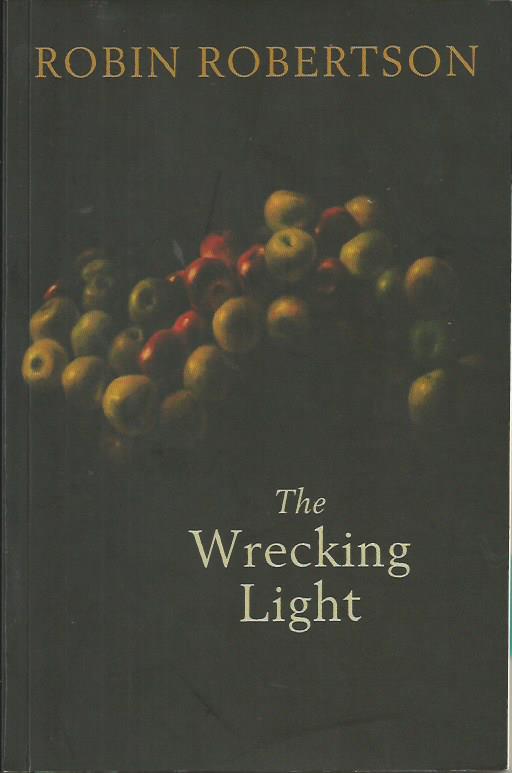
The poet searches: for his shadow-self, for grief and guilt, and for life and meaning. In The Wrecking Light, Robin Robertson moves into the past, sheds light onto the present, and shape-shifts between reality and the surreal.
In the first section, Silvered Water, the first poem, “Album,” sets a tone that echoes throughout the collection. It begins:
I am almost never there, in these old photographs: a hand or shoulder, out of focus; a figure in the background, stepping from the frame.
(…)
A ghost is there; the ghost gets up to go.
The Wrecking Light is full of memories that include memories of others: the girl / with the hare lip / down by Clachan Bridge (“By Clachan Bridge”). And the collection ends with the personal memory of “Hammersmith Winter” when through the drawn curtain / shines the snowlight I remember as a boy, / sitting up at the window watching it fall. Mixed with memories is a sense of grieving, as in “Fall From Grace:”
My life a mix of dull disgraces and watery acclaim, my daughters know I cannot look into their clear faces; what shines back at me is shame.
The theme continues. In “Tinsel,” in the woods: If you’re very quiet, you might pick up loss: or rather / the thin noise that losing makes – perdition. / If you’re absolutely silent. And with loss comes leaving. The very next poem, “Leaving St. Kilda,” takes us on a sea journey brimming with geographic details and clear images cut clean by departure. In this geographical catalogue: sea rhythm; progression.
But don’t get the wrong idea, these poems are neither nostalgic nor maudlin. In the skillful hands of this visionary, we are taken on a raucous ride with unexpected twists and turns.
In the second section called Broken Water, the first poem’s horror and the brutal honesty of rough island life and penance is laid bare. In “Law of the Island” Robertson paints a vivid description of island punishment and the casualness of its deployment. In this section, he gives us a back-and-forth of short poems with punch and longer, exploratory ones where he writes after Ovid, Neruda, Baudelaire, and myth to understand humanity’s weaknesses. Here, “Grave Goods,” is beyond surreal; it enters magic.
In the third section, Unspoken Water, the woods and forests of childhood again dominate. In “The Wood of Lost Things,” the vision is clearer and in its clarity, more haunting. Robertson writes: I have found the place I wasn’t meant to find (…)
Hung on a silver birch, my school cap and satchel; next to them, the docken suit, and next to that, pinned to a branch, my lost comforter – a piece of blanket worn to the size of my hand.
You can see how he leads us. Like Narcissus he sees a face I seem to know. But unlike Narcissus, he isn’t struck by his beauty. Of course not. But he does give us a resolution (of sorts).
In The Wrecking Light, there is much of the sea, of woods, of love and loss, of searching. I return to the final poem, “Hammersmith Winter,” and the poet’s final plea: Look at the snow, / I said, to whoever might be near, I’m cold, / would you hold me. Hold me. Let me go.
Robin Robertson has written an intense, lyrical collection with movement as through dreams bordering on nightmare (I dare not use the word haunting again, although that is the effect his writing creates). This is Robertson’s forth book of poetry; I recommend you enter his world.
Before, there might have been children playing in the street, / the rumbling of cars and feet, / but now there is nothing. Taut, stretched stillness. Waiting.
“Walking Shankill Road” (29)
Andrea MacPherson travels in Away — and we travel with her through the magic of her poetry. The journey begins in Ireland, a personal quest where sites and family are sought.
This is the one place you insisted I come,
this place where limestone weeps
and children once played between execution sites
and burial grounds.
So begins “here’s to the wings of a bird” (12) and with it an elusive you, someone who has planted the seed of return, a return instead of, as if MacPherson is visiting the memories of another. Throughout, the time of the “Troubles” persists. In “boundaries” (16), she writes:
We anticipated a stop here,
men with guns and strict faces
(tightropes of unsmiling mouths,
eyes that have seen marchers falling)
a checkpoint at least, with flashlights
turning our faces to ghosts.
Instead there is nothing but seamless conversation;
rapeseed fields.
Trading prayer for something even quieter.
With the poet, we ride through countryside, lulled, until Belfast and RUC men… their guns and tanks.
Somehow we have forgotten about the strife
we had prepared to see, more content
with wavering fields a thousand shades of yellow
and ancient schoolhouses.
These places where people once sat.
The “Troubles” are old; the people we meet are old. It is as if all love and youth have left Ireland. MacPherson captures a poignancy that is haunting. In “the backyard faerie circle” (20), we visit an old man, alone:
A grey cardigan coming apart at the seams,
smelling of sheep and skin and age.
A threadbare chair,
imprinted with the memory of the body
thighs and shoulders and hip bones.
This is what his life has become:
wool and paisley just there.
We learn something of him, his youth and love, but now the small patch of wild roses / left untended, / forgotten in the shade.
The family journey of remembrance crosses the Irish Sea and continues in Scotland where we learn MacPherson’s mother’s mother left with only a rose-gold / wedding band, a few porcelain figurines (“blue salt,” 41). In “Caldrum Street,” MacPherson writes: I take photos to enter a past that is not mine (48); yet the poems lack nostalgia. They are immediate, felt, experienced. History – political and personal – continues to dig deep, becoming, as she says in one poem, fable.
MacPherson’s travels continue to France and Greece. In Paris: A streak of blue paint / thick / across a painter’s cheek (“sketches of Paris, 71). Allusions to artists and their art continue. In “La Goulue & Jane Avril” (77).
You write to me from Toulouse
and I think not of you and the red
city you describe, but of the small
deformed man with miniature legs
(childhood breaks that never quite healed)
who drew cabaret dancers
and whores and faceless men.
Smell the absinthe on his stale breath,
the unwashed quality of his hair.
Dark, dense in the spring sun.
…
Toulouse is nowhere in those photos,
only the possibility of his compressed figure in the corner,
black coat tails, shriveled leg
fleeting.
In “National Archaeological Museum” (85), Greece, archeology replaces the art trope of France:
[The statues] have all been saved from watery graves,
a shipwreck hundreds of years ago in the Aegean.
They might have been home for minnows,
crustaceous prawns, octopuses;
seaweed might have covered the boy’s eyes,
letting him forget he once had limbs.
As the trip comes to an end, she writes: I dream of the places I will go once home: / thick rainforests, yards of lilac and rose bushes…relearn the taste of green (“the geography of bougainvillea” 89).
Away describes a circle, a going out and a return – to place, to self – and it does so with keen observation and insight. This is Andrea MacPherson’s second book of poetry. It is now one of my favourites to be read and reread.
Hints for Writers
For writers on personal journeys to places of emigration, Away shows how the quest can embrace the stories of generations, the return (almost) on behalf of parents and grandparents but also open doors to others curious minds. MacPherson travels with purpose, but her list of places and people to see does not blind her. She finds ways to draw readers into her poems; she bridges the personal : universal divide. If this is your journey, read MacPherson with an eye and ear as to how she accomplishes the magic.
The author’s voice is consistent throughout the collection, creating cohesion between poems and sections of the book. MacPherson’s voice is intimate/personal but also knowledgeable. We trust her. We also remain open to the surprises and insights that happen along the journey. Think about how she uses the first person to control what we see and feel and then how she inserts the twist that makes us pause and contemplate the awareness or insight or question revealed.
Available through your local bookstore or online: Away
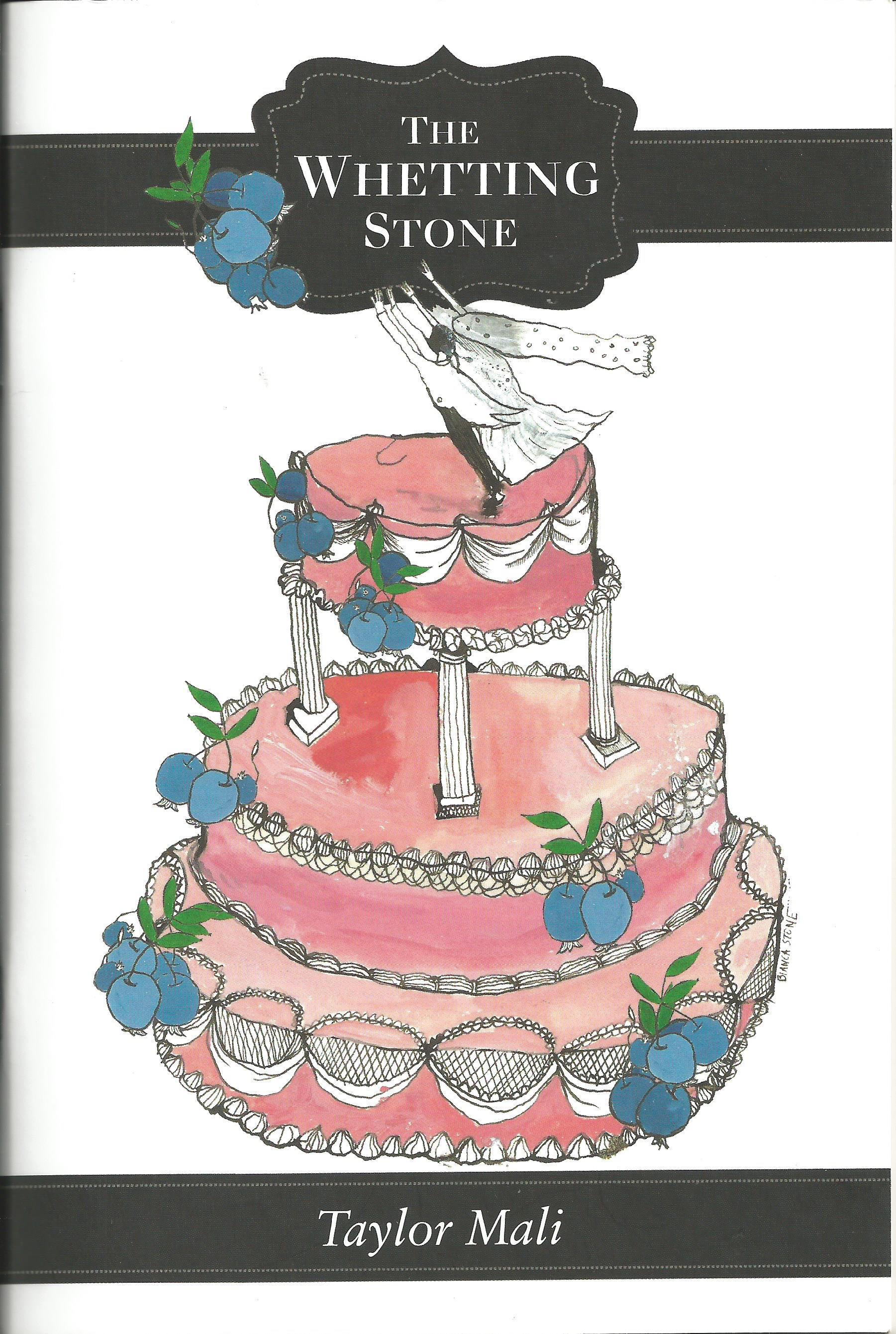
The Whetting Stone by Taylor Mali is as piercing as the knives whetstones sharpen. The poems in his collection – each in its own way – are stunning and not in the least sentimental. Together, they take readers on a breath-taking journey through love, grief, suicide, loss, and finally back to love.
“Grief Moves,” the first poem introduces a sensuousness and intimacy that leads readers through the eighteen poems that follow.
…before falling into sleep,
how we came together, loss now
a moving thing between us.
It also introduces the “other” of the collection whose “grief…become a kind of need.”
Perhaps the most powerful poem is “Six Stories.” The first stanza reveals the suicide, followed by six short verses, each enlightening the backstory lurking behind the act. Like others in the collection, this poem has been honed to the fine precision of a chef’s knife. There’s not a word out of place; all excess has been cut. The language is precise and concise.
We travel inward with Mali, glimpsing 10 years of marriage, but the focus of The Whetting Stone delves into those that come after. In “Twelfth Anniversary,” Mali shares a light, almost humorous – but extraordinarily insightful – moment that marks (perhaps) the beginning of forgiveness: “And what is more, that I loved you as best I could while you were alive.”
Mali’s skill is as sharp as the knife that surfaces in many poems. One poem I found particularly moving has the longest title: “Things We Both Know / That I Still Have to Tell You.” It ends with a two-line stanza:
You are none of the things
you think you are. Or even alive.
Pain and healing are equally present in the words and what is written between the lines.
The Whetting Stone offers readers an insightful, honest journey through trauma until Mali has a crucial awareness and a shift occurs. He’s ready to let go and writes:
Lover, at last, please leave me, after all these years.
You have cried enough. Leave me to these tears.
Eventually, he recognizes:
She was
not mine
to save.
Taylor Mali’s The Whetting Stone won the 2017 Rattle Chapbook Prize. I highly recommend this thin, extraordinary chapbook.
…Maybe time is not / an arrow after all but a whirling / storm about to touch down (“The Possibility of Time Travel”)
Mary di Michele’s consistent search through place and time continues in her latest collection, Bicycle Thieves, as do particular images.
Thirty-seven years ago, di Michele’s Bread and Chocolate (1980) was published, and in it a poem called “1952.” The poem lyrically describes the photograph we see on the cover of Bicycle Thieves. The poem and her current book’s cover attest to the desire to know what shaped her parents, her self. “1952” tracks a migration and in it we glimpse a man and a woman and hints of a puzzle. This puzzle is further explored in her latest collection.
In “The Bicycle Thief,” di Michele shares birth-place images and vivid sketches of her father – in youth and old age. She captures a return visit to Lanciano and regrets that she cannot go back in time as well as place, to a time “before / the World War, seen the boy my father was / before his father betrayed / a barefoot son / and sold his bicycle.” A patina of love and loss and change loosely covers section one – The Montreal Book of the Dead – like a sheer veil lifted in a breeze.
The middle section – Life Sentences (An Autobiography in Verse) – is comprised of 100 three-line stanzas. In them, a life passes by, nuanced with detail, yet like an illusion. Whereas in section one, the emigration is physical – place to place – in section two it is the lived past:
The past is that far
country you emigrated from
as a child.
It is the past of the poet under a sharply focused magnifying glass where she peers intently at that small enlarged circle, moving the magnifier across memories and through time. The cautionary voice warns: “Mary, you can’t go / back to yesterday, you were / a different person then” (#90). But Socrates suggests that an unexamined life is not worth living.
Di Michele, like Lorna Crozier (What the Soul Doesn’t Want, reviewed July 21 2017), poignantly holds a lens to the past, focusing it on both joys and sorrows in a search for its essence, for meaning. Di Michele’s poems explore the particulars of her life (of an immigrant child, of the mystery of parents, of the curious mind). They create a portal, a bridge that gives voice to universal experiences recognized by her readers.
In the final section – After – we find influences of di Michele’s reading, but even here, she takes us to a specific place and time that is hers. My favourite poem in Bicycle Thievesis “Evening Light” (After Umberto Saba); she tells us:
Moon rise.
In the street it’s still
day though dusk’s rapidly descending.
The young don’t notice, they’re busy
texting, faces lit up
by the screens. They have no idea
about death, how in the end, it’s
what helps you live.
And here we have it all: the observation and insight, the sense of time’s movement, the lyrically perfect words and flow.
Since Mary di Michele’s first book (Tree of Life, 1978), she has been honing her poetic skills, the writing becoming sharper, the insights keener. It’s hard to imagine what will come next – after Bicycle Thieves – but already I want it.
Available through your local bookstore or online: Bicycle Thieves