I’d sit with Napoleon in exile
and chat casually. (St. Helena)
The Character Actor Convention by Guy Elston brings together sharp, edgy, quirky voices in which the actor/poet speaks for the historic and the legendary, for a songbird, oxygen, and a board of directors. On first reading of Elston’s collection, thoughts of lad lit, then theatre of the absurd surface (Six Actors in Search of an Author?), but these poems are neither superficial or existential. A second reading challenges the first impression of witty lightness. The poems imagine; they reimagine, and they question. Elston’s “voice” is clear, clever, and has something to say.
The collection’s initial poem, “The Stake,” begins: “The night before, / and Joan is certain. As ever.” Like the absurdist existential authors of the 1950s, the ending mirrors the beginning: “Oh, I’ll burn, Joan laughs. / I do every time. Your move.” The magic lies in the couplets between. The chess-playing voice asks: “Do I want to make her wonder?” In the fifth couplet Joan asks: “How can these cassocked frauds judge me, / Joan sighs. Are you like them?” The voice watches a spider. Chess, a suggestion that life and death are a game? The spider, an allusion to spider-wisdom à la Charlotte’s Web? There’s also a “fallen bishop” and much to ponder.
This prologue poem introduces key themes that thread through The Character Actor Convention. Thoughts of dying and death subtly weave through the poems, as do games. The bishop (religion) and judging also thread through the collection, as they do in “St. Helena” (21) where the voice plays cards with Napoleon:
St. Helena
I’d sit with Napoleon in exile
and chat casually.
There are more variants of Patience
named after me than any other man,
he’d mention, casually. He had a habit
of counting waves and cheating
every time we played cards.
The money meant nothing to him,
less than nothing to me.
You do know that nobody
who joins me here may leave?
he sometimes asked, while watching
the distance for sails. I dug a little hole
in the sand with my left foot.
All summer, I never told him
we don’t even have God in the future.
Joan and Napoleon aren’t the only characters that confront death. In “For a Good Time” (57), fish fly larvae “die within days.” Elston refers to other historical personalities who meet death – “eight / dead Philippes. Eleanor of Castile, / of Provence, of Aquitaine…Joan of Arc…the dead Louis’s.” But I’m struck by the fish flies – hundreds gathered on outside furniture this spring and every light-coloured surface in my river town, crunching underfoot as I walked on downtown stinking. What inspires Elston to combine fish fly larvae with these historical figures? His vision is playful, unique, and surprisingly perfect. He draws us in with the whimsy and stops us with insight and the juxtapositions of his subjects. Life is brief for both the larvae and us. Life is so brief, the voice “stop[s] gunrunning, / start[s] writing poems.”
The title poem falls mid-collection (33).
To read the full review, please click here for the link to The tEmz Review.
In July, I read a review of Legwork by Michael Vince, his tenth collection, in The High Window Reviews. I travel and often write about my experiences and was curious; I ordered the book.
The reviewer, Edmund Prestwich, notes how the poet “interweaves gravity with quirky humour,” how the poems often include a “shimmer of implicit reflections,” and sometimes the poems take on a “more cerebral, conceptual form.”
Although the poems are set in specific places with specific details, the actual location is not named, and the poet manages, with apparent ease, to jump the gap from personal to universal. I often find the poems take me on a surprising journey, as my favourite poem does:
Spa Town
We walk to the spa town, just a small village, hard going in the heat, though nobody seeking for its healing waters goes there on foot, uphill and down, it’s just too much for them, like the sudden appearance of a tethered bull or a flurry of chickens, where rocks and pines hide the sea view. On the spa town streets elderly folk no longer linger over lunch, or smoke and sip at coffee, but well wrapped in layers of showy abstinence and in cosy dressing-gowns seek health-restoring waters. Here we watch one, an old man in pyjamas, stroll out unsteadily down a concrete pier towards the ocean, followed by a ginger cat, tail up, pacing to keep company. The man turns back several times and mutters, exchanging nods with this attentive creature who hasn’t come here for its health. They look like a couple out for a walk, taking the air on holiday. When they reach the end of the pier perched above the waves, the cat sits and grooms. The old man lights a cigarette, and convinces himself that nobody can see, while the ginger cat waits, much like a nurse, or a child out with grandpa, who comes each year for coffee-less, wine-less days. The old man gazes out, where the healing waters mingle with the bitter salt. He takes laboured breaths, then turns. He says the word, the cat agrees, and they both begin their slow return to the shore.
A poem with a very different feel from “Spa Town” is “Borderland,” which begins: “She told me the day they crossed over, / almost as if it was a holiday….” It’s a homecoming poem in which memory, dissociation, and the absurd collide. In part 2, Vince writes: “People from across the border / come here to walk around the suburb, / the designs are quite famous, / people whose grandparents lived here / when it was another country. …Home, that’s a flexible idea, isn’t it? / Have some more wine.”
Vince writes on his website: “I’ve always been interested in the historical and psychological pressure points of living in a particular place…. As I have lived and worked for much of my life in other countries, and being part of a bi-cultural family, my writing explores places and people, feelings and experiences, with that perspective. I believe that we constantly explore and recreate such identities, which shift through time and place and language….”
If you follow my reviews, you know that I read many Canadian writers. Yet, I think it’s important to read widely and internationally. There are different tones, different ways to find the core of a subject, shifts of perspective. What are you reading?
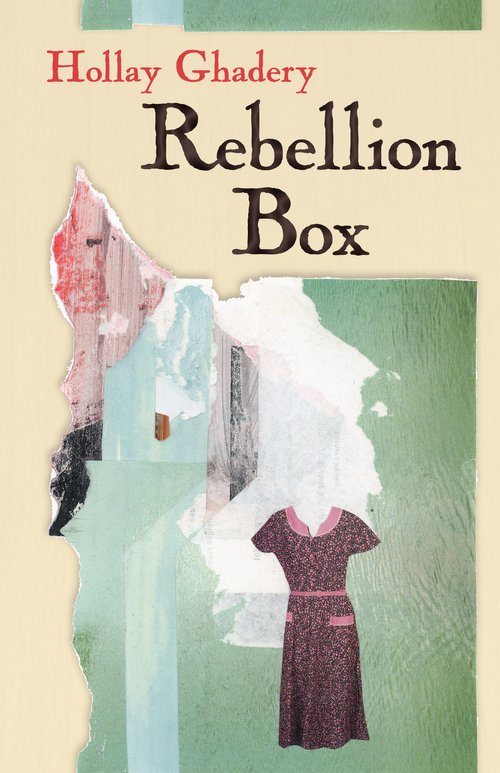
Perhaps one shouldn’t judge a book by its cover, but the cover of Rebellion Box is revealing. The illustration is dominated by a housedress trimmed in pink upon a paint-peeling background exposing an opaque scene that leads the eye to another and another. This, in a way, is what the poems do in Ghadery’s debut collection.
Opening to the first poem, “Postcard, Santa Maria,” we meet a girl, sensuous beside a pool, but then, a disclaimer: “I’m not that girl / anymore.” This, followed by the surprise “the cervix / of a fifteen-year-old, / my doctor says. / Not bad / for four kids” (1-2). And so, we are introduced to the speaker of many of the poems that follow, and a dominant theme of the collection is identified. Who is this woman who once lay by a pool in sunshine, who is a mother, who we will learn is biracial and bicultural, who attends historical talks, who writes poetry “to get [her] thoughts straight,” as suggested in an article Ghadery published in The New Quarterly.
In that article, Ghadery refers specifically to the title poem (45-46), a sestina, in which form controls and shapes the poem – a box as it were, for sharing the 1837 love story of Joseph, prisoner of the rebellion, and his love, Mary. The form disciplines Ghadery, allowing her to reveal the “mores and values” of the time in a tight, coherent way. Those mores and values are a constraint for the protagonist who cannot approach Mary directly, and I wonder, as I read through the collection time and again, if the Rebellion Box hasn’t become a metaphor for the constraints experienced by the poet herself.
To read the entire review that is published by FreeFall Magazine, please click here.
“Weathering Water-Wave Theory,” Consilience Journal, Columbia University, forthcoming Fall, 2025 — The editors wrote: “Our reviewers enjoyed reading your poem, which highlights moments when opposing forces come together—whether in nature or within ourselves. We also admired the choice of words, the use of enjambment and punctuation, and the masterful use of meter.”
“Unmarked: A Lament for the Children Buried in the Unmarked Graves of Residential Schools,” Strong Hands Stop Violence poetry anthology, ONWA, Vol. 9 (December 2025)
“On that Forbidden Evening,” “Willow Dream,” and “Albinoni’s Adagio,” Live Encounters, Volume Four, 16th Anniversary, November-December 2025
“Weathering Water-Wave Theory,” Consilience Journal, Columbia University, (2025-09-22)
“She Sings Only at Twilight,” “Company of Wayfarers,” “A Blizzard Blows,” “Phantasm,” and “Beloved,” Lothlorien Poetry Journal Volume 28 (print and online) Sept. 30, 2023).
“Musical Invocation” poem profiled and read/recorded, Jerry Jazz Musician (September 2023).
“Journey,” “Ashes,” This Wine into Water, a chapbook anthology (Forward by Lorna Crozier, Wintergreen Studios Press, December 2018.)
Earlier writing was published in literary journals including the Fiddlehead (#130 Summer 1981) Descant (#32-33 1981) and Northward Journal (#20 June 1981) as well as anthologies such as The Wisdom of Old Souls (2008), Grandmothers Necklace (2010), Close to Quitting Time (2011). (Some early poems published as Kathryn Deneau.)
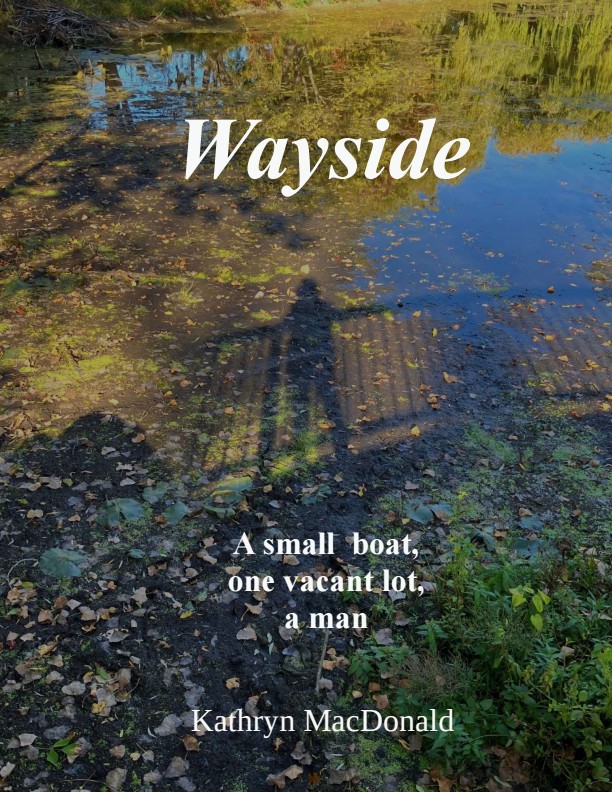
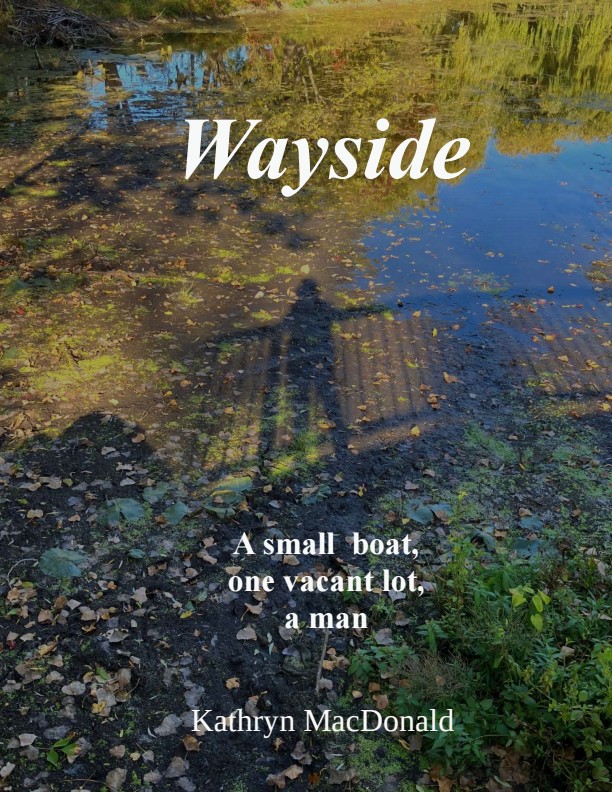
Review of Wayside: a small boat, one vacant lot, a man by Antony Di Nardo (The Miramichi Reader)
Some words, when you string them together, defy their simplicity and create a world of their own. They take on the voice of their writer and that writer’s moment in time. And where mind and matter intersect, a singular world of genuine emotions, the poet’s “objective correlative,” comes to life on the page. Such is the art of Kathryn MacDonald. Hers is a vivid, intimate world, where Nature flourishes and serves as the source of her language, giving us Wayside: A small boat, one vacant lot, a man. Twenty-one poems. Twenty-one facets of a poet’s lyrical “I.”
These poems, both by design and content, are watercolours. Oils, pastels, hard acrylics, are made of edges, rely on borders, illusions based on blocks of space. I generalize, of course, but for me, watercolours blur the lines between what’s real and what is felt. They soften those distinctions between our inner and outer worlds and, in so doing, suggest sensations that intensify the human experience. Each poem in this collection has been rendered that way, with brushstrokes dipped in water, light and words. They evoke a faithfulness to life steeped in love and friendship despite the grief and sorrow of loss. And all of this MacDonald achieves without the gush of sentimentality.
These are wonderful poems. Literally, full of wonder and acceptance of a poet’s right to rearrange feelings into words. Her images, as one would expect, are exquisite. She paints tableaux that manifest the presence of another in their absence. She writes: “his lips brush mine when we part / leaving my blue bicycle wobbling.” So much is said in those few words: minimum of brushstrokes not only illustrate a fleeting moment but paint a powerful human emotion. Her use of “wobbling” – after a succession of alliterative b’s – is a master stroke of lyricism, its sound and sense depicting a feeling I associate with the thrill of uncertainty and stirrings of physical attraction. A heron “stands on willow-whip legs,” appears as a Modigliani figure that “strolled / along the dock” and becomes “a small grey man – / before taking flight.” I am awe-struck by that compression of a human figure and a giant bird in flight, the two synchronized to evoke the beautiful contradictions of Nature’s work. And MacDonald’s craft.
The skies are sometimes grey in Wayside. There is illness and tragic ultimatums. That “small grey man” who sails the Bliss, a small boat, must also face its loss. As does the painter of these poems who “listens as his cane shatters silence” and is resigned to acknowledge that “[c]ells in his body blossom multiply.” Loss is tragic and death inevitable, but life goes on and the poet puts that feeling into words:
Air sits heavy, burdened with coming rain. A tear breaks in the flock of cumulous clouds and light slips obliquely into the river’s mouth, slips onto moon-round lily leaves where flowers will one day bloom.
I so admire the cadence and sway of such fluid lines – I can’t say enough about their music, their subtle, almost imperceptible, alliterated syncopations! These lines are a testament to Kathryn MacDonald’s vivid way with words, both pictorially and sonically.
In this chapbook, kayaks resemble “elongated sunrises.” Reflections float “downriver / downriver / to the sea.” Dragonflies are dragons and “soar / in six directions, / hover / like hummingbirds.” A kiss is “as subdued as the gauzy sky, still as the mouth of the river.” Birds and flora, waterfront creatures populate these poems. And turtles. Turtles “especially.” MacDonald writes “I wonder if we were to decipher / the map carried on their backs / what journey might be revealed.” Her metaphors come naturally. They are both the light and brushstrokes of these poems. Here’s a scene she frames to portray dusk at the end of a summer’s day:
Day slips toward July’s long dusk the quiet hour when mallards and geese return to their nests, the great blue spreads his wings and flies to the willow’s shadows, an osprey circles toward its platform of sticks, the moon-pale swans glide across the bay.
This scene sets the mood for what transpires between two people when one must leave for good. I’ve never liked the term “pathetic fallacy” to describe the way poets personify their natural environment, it seems demeaning to me. Regardless, MacDonald’s use of this device gives us lines like these: “My sorrow wreaks havoc / with fast-falling snow / as I kick through drifts / that bury the river trail / to him.” She compresses both a narrative (her friend is dying) and an intense feeling (her sorrow) in a tightly woven yarn of diction, voice and theme. As for the dynamics of form and text that structure these poems, they are, in the words of Emily Dickinson, like Oars divide the Ocean, / Too silver for a seam.
MacDonald’s art comes with a clear sense and understanding of what makes poetry, and how to translate emotion into words. Wayside is evidence of that. Pick up the book, open it to any page, there you’ll find a watercolour of metaphors, imagery and soundscapes that tell a story of a small boat, one vacant lot, a man … and, not to forget how books like these really come to be, of a poet’s working mind.
Details
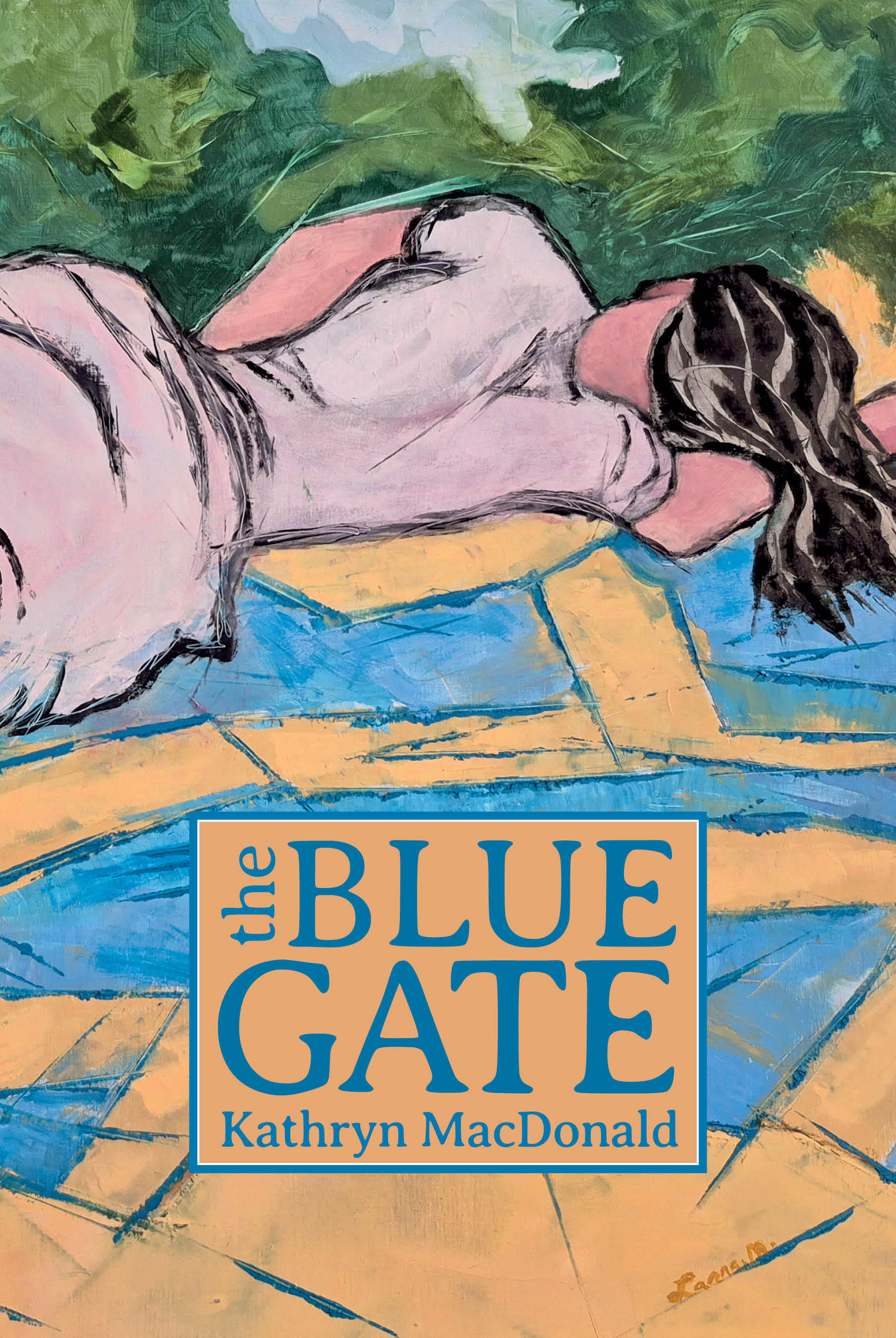
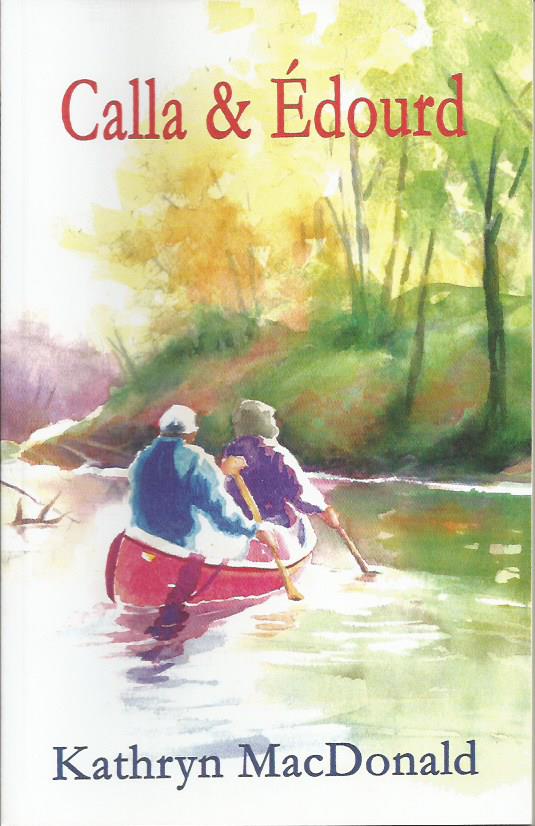
Kathryn MacDonald’s poetry has been published in Room, FreeFall and other Canadian literary journals and anthologies, as well as internationally in the U.K., U.S., and other countries. Her new poetry collection, The Blue Gate is available this Spring 2026 (Frontenac House). Kathryn has three chapbooks: Wayside: a small boat, a vacant lot, a man (Big Pond Rumours Press, 2026), Liminal Spaces , a chapbook anthology of ekphrastic poetry by Kathryn and three fellow-poets (Glentula Press, 2025), and Far Side of the Shadow Moon: Enchantments (Glentula Press, 2024). Her first full poetry collection, A Breeze You Whisper: Poems, and a novel, Calla & Édourd were published by Hidden Brook Press (2011, 2009).
Antony Di Nardo lives in Cobourg, Ontario and is the author of seven books of poetry. His most recent, Forget-Sadness-Grass (Ronsdale Press 2022), was a CBC Books poetry pick. His suite, “May June July,” won Exile’s Gwendolyn MacEwen Poetry Prize and was nominated for a National Magazine Award. “Among the Boughs,” first published in The Fiddlehead, will appear in this year’s Best Canadian Poetry anthology.
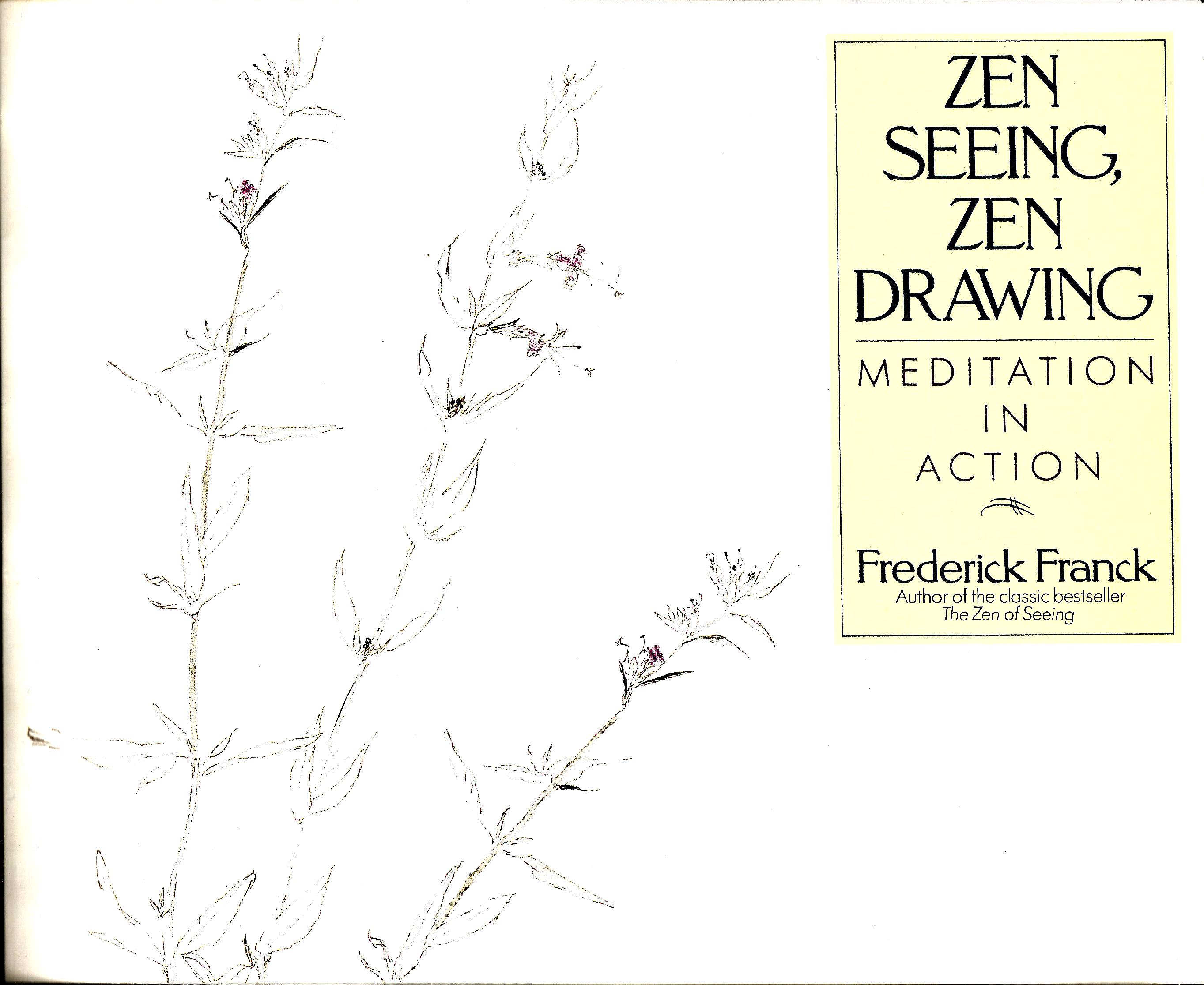
A true drawing is a very private dialogue between the artist-within and some facet of the world around him or her.
Zen Seeing, Zen Drawing came to my attention in 2013, already a 20-year-old book. Since then I’ve read it a few times and it continues to speak to me. I recommend it to you, especially the travellers and writers among us.
Like Franck, I cannot sit and meditate. I fail to clear my mind of the dribble that pushes its way into any space and silence. Yet, when I sit to sketch, everything disappears except the object of my attention. I slip into Zen-state where an hour or two passes as if it was a moment. Franck explains this magic as he walks readers along the path from his early days of gallery shows to his gradual movement into drawing and eventually to the transcendent moment of the unification between seeing-drawing and the experience of oneness. But I am more writer than sketcher – more years of practice – so besides the sketching advice, I’m taken with the writing advice he offers.
Bashō, the father of haiku, warned his students: “Jot down your haiku before the heat of perception cools!”
And this is the way Franck suggests we draw. See the object, enter it through the pen, and experience oneness with it. He compares this experience with the fleeting, but timeless, haiku:
An authentic haiku must, in one breath, grasp the joy as it flies, the tear as it trickles down the cheek. In its seventeen syllables a haiku must catch the unsayable, the mystery of being and non-being: timeless mini-satori in fleeting time:
This dewdrop universe Just a dewdrop And yet, And yet … Issa
This is what the sketcher strives to achieve: the quick rendering and the immediacy of becoming other; the Zen moment (whether it passes in mere seconds or whether it stays with you minutes or more).
A final thought on haiku and drawing: “Haiku transmit neither an idea nor a philosophy; they transmit pure experience into a minimum of words that grasp a moment of grace, be it joyous or heartrending.” When I facilitate writing workshops, this finding the essence of experience is what participants are encouraged to discover through their stories.
One of the reasons I’m back at sketching after a bit of a hiatus is to really see what’s before me when I travel. Like Franck,
… I entrust my bones again and again to flying contraptions to circle the globe. I can’t help belonging to this generation of the restless, the globetrotters, the astronauts, obsessed with seeking, pursuing salvation elsewhere, as if the black-eyed Susans in Provence were more black-eyed than the ones in my backyard.
He ventures at some length to explain why taking photographs is less apt to allow us into a culture, for example (and can actually be intrusive and alienating) than drawing. In addition, with photography, the Zen experience is more elusive and, if it is present at all, passes within the nanosecond release of the shutter and, with rare exception, fails to capture the essential essence of the subject/experience. Nevertheless, I’ll continue to photograph my travels, but I’ll add to those images the pleasure of sitting in parks, standing in doorways or on a rock by the ocean with pen, blank journal page, and a box of watercolours. To give you two representative examples, recently in both Morocco and in Mexico, people shied away from the camera but when I got the sketchbook out, people came over to peek and to talk about the process.
Discovering the essence of the object, its authenticity, and its oneness in a Zen sense, is what painters and sketchers seek. It is what I seek in my humble, clumsy and beginner’s way. It enhances travel experiences and the memories that follow.
“…we thrive or wither depending on how nourishing our environment is.”
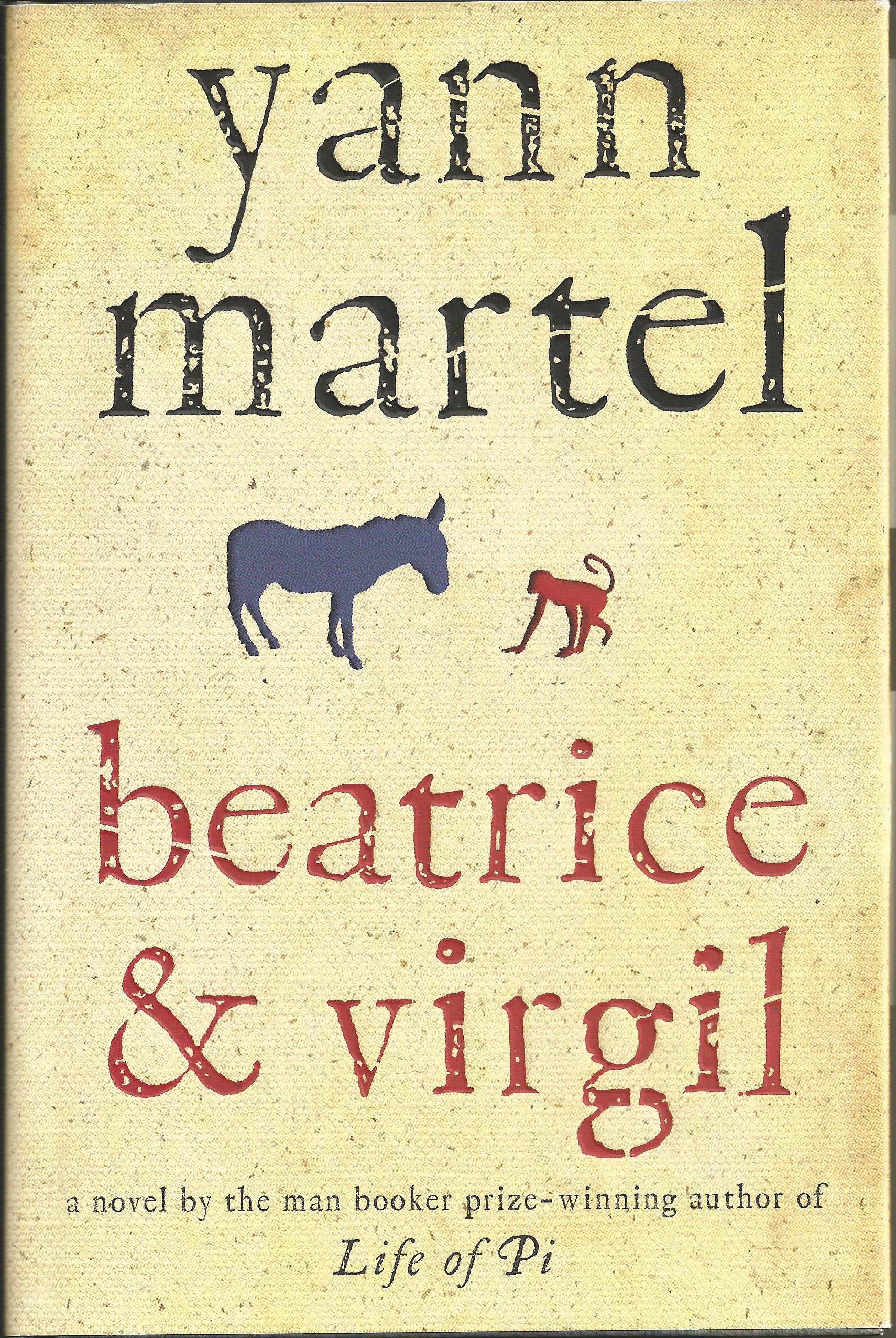
The environment of Beatrice and Virgil is anything but nourishing. The landscape is bleak. For the most part, two characters hover around a tree in barren space.
Panned by Michiko Kakutani in the New York Times, I found Yann Martel’s story haunting. It slips into waking moments and has entered my dreams, which is a bit unnerving but says volumes about the power of the story.
Reminiscent of Samuel Beckett’s Waiting for Godot: there’s neither plot nor action to speak of. But unlike Beckett, Martel’s characters are animals, not tramps – the donkey Beatrice and the howler monkey Virgil. Martel also alludes to Animal Farm among other literary references. Perhaps, too, he’s evoking the dark side of his very successful Life of Pi. Yet another aspect toward understanding Beatrice and Virgil is the obvious allusion to Dante’s Inferno wherein Virgil guides Dante through hell and Beatrice accompanies him through Paradise. However, in this story Paradise is absent. Yet, there’s still one more curve: he’s explicit about the Holocaust, making this story an allegory.
Martel is a philosopher and a writer. As he did with Life of Pi, Martel frames his story, creating a story-within-a-story. In the beginning, his protagonist philosophizes: “A work of art works because it is true, not because it is real.” This fictional author proposes two stories to his publisher, each with a front cover, a “flip book.” One side would feature an imaginative novel about the Holocaust, while the other side would provide a factual essay. Readers would have “a choice…when dealing with upsetting matters.” Hold the book one way: creativity; the other: historical fact. Given the subject, the publisher wants only nonfiction. Henry makes a ploy for including the creative story:
Fiction, being closer to the full experience of life, should take precedence over nonfiction. Stories—individual stories, family stories, national stories—are what stitch together the disparate elements of human existence into a coherent whole. We are story animals.
Henry continues to argue for the flip book idea: “But behind serious nonfiction lies the same fact and preoccupation as behind fiction—of being human and what it means—so why should the essay be slotted as an afterword?” He wants two perspectives and two front covers. He loses the argument and slips into writer’s block. Then we get into the longer middle story—the creative interpretation.
An amateur playwright (also called Henry) becomes the antagonist; the setting is his taxidermy shop where he practices his craft and displays dead animals, many in diorama, including the donkey Beatrice and the howler monkey Virgil. Taxidermist Henry has asked author Henry for his help in writing a play and the writer Henry visits and listens to excerpts read by the tall, gruesome taxidermist. It is not a happy experience, yet he’s drawn to the man, his shop, and the “conversation” between Beatrice and Virgil as excerpts from the script are read to him. Their situation is stark and as gruesome as their creator. Near the novel’s end, the author Henry reflects: “Once you’ve been struck by violence, you acquire companions that never leave you entirely: Suspicion, Fear, Anxiety, Despair, Joylessness.”
After more horror and some healing, author Henry muses about the donkey and the monkey and what his lingering memories mean: “All that remained now was their story, that incomplete story of waiting and fearing and hoping and talking. A love story, Henry concluded.”
A bleak love story, but should we ever be faced with the dystopian reality of Beatrice and Virgil, we could hope for the kind of love they shared.
Beatrice and Virgil is not a story for everyone, but for those who like puzzles and allegories and the “theatre of the absurd,” I recommend Martel’s book to you.
Kathryn is available for readings of her poetry and fiction, welcoming opportunities to meet with readers and writers at all levels. She facilitates workshops and especially enjoys meeting with writing groups.
Participatory presentations and workshops include topics such as:
Writing Your Passion: Writing Place (Part 1); Writing Character (Part 2)
These two workshops are each facilitated over four Monday evening this fall (Part 1 begins September 11, 2017; Part II begins October 16) at the Belleville Public Library. Check out previous posts on “Workshops and Events” (scroll down) for details.
Telling Our Stories: Offered as a two-hour presentation, or a weekend-long writing workshop. Participants are provided a handout or workbook of ideas, strategies, and encouragement that lead to inspiration or, for workshop people, a short creative memoir and a skill-set to carry forward. Besides group work and sharing, writers receive individual feedback to guide and direct.
Writing Foreign: in this travel writing workshop – a brief two-hour overview to a weekend of trying your hand, to a 10-day travel experience – participants will explore such topics as:
o Finding Your Voice
o Capturing Place
o Writing People and Culture
o Nitty Gritty (from research to the literary toolbox)
o Movement (from the known world into the unknown and back again)
Relevant here is the work Kathryn did in a Canadian International Development Agency (CIDA)-Queen’s University program in development education (1986-1992).
Kathryn offers schools and groups two-to-four hour participatory workshop/presentations with “Talking Fantasy Literature” topics such as:
o Fantasy in our Lives
o Portals we Cross
o Through the Unknown
o Magic of Change
This could be followed by a Tapping Your Fantasy writing workshop.
Kathryn taught 14-week-long fantasy literature for credit (through Loyalist College and Ontario Learn online, 15 years). She has also taught fantasy writing at the college level.
Kathryn enjoys traveling, sailing, hiking, photography, and sketching. Born in Southwestern Ontario, Kathryn has lived in Ottawa, Winnipeg, and rural Eastern Ontario. Her home is now in Belleville on the Bay of Quinte. Kathryn holds a B.A. from the University of Windsor and an MPA from Queen’s University, Kingston.
For information about these topics and to discuss others, please contact Kathryn…
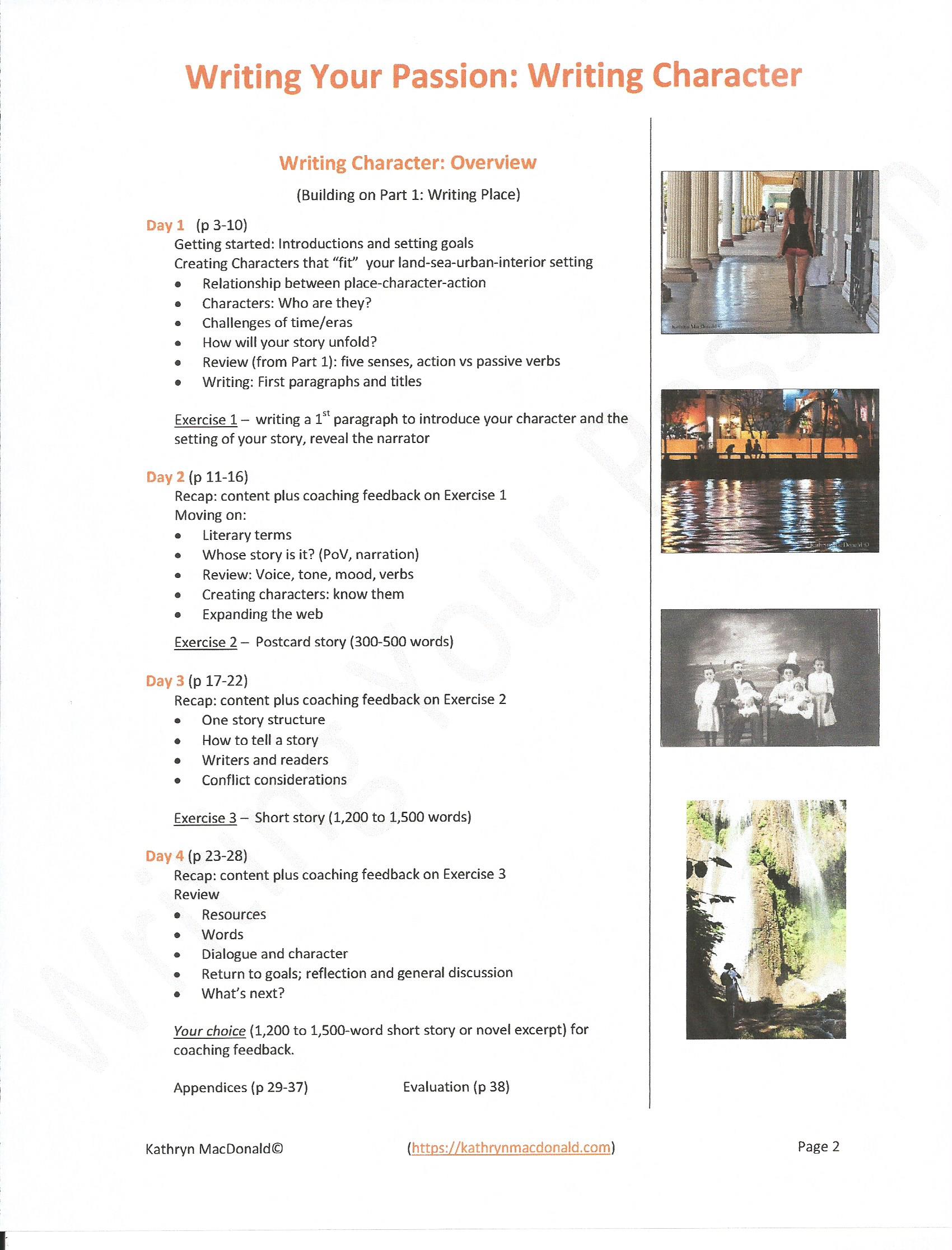
This is Part 2 of the “Writing Your Passion” workshops offered this fall (2017) at the Belleville Public Library. Writing Character follows Writing Place — each workshop facilitated over four weeks (scroll down for dates and prices). During both workshops our focus is on the important connection between place-character-action.
When characters come alive on the page, magic happens – characters become people brought to life by writers’ skills and their art. In “Writing Character,” participants will explore the link between place-character-action. With the help of literary techniques, participants will create characters that “fit” naturally into their stories’ settings. Whether you are a beginning writer or advanced, interested in memoir, fiction or another genre, this workshop will provide skills that will lift your stories – and the people who inhabit them – to the next level.
The overview:
If you’d like to get more out of the places of your stories. Think about joining me at the Belleville Public Library. Time is short: sign up now ((613-968-6731 Ext #2239) or drop in at 254 Pinnacle Street, Belleville, Ontario K8N 3B1.
Lucky me! I have a studio room, an atelier, a room of my own. It sits in the front of the house with tall north-facing windows and good light. Once it was the dining room, but rarely used. Now the dining table sits at the rear overlooking the small city backyard. It’s closer to the kitchen with an even better view. Why not?
With the dining table gone – replaced by a smaller more practical one in a place more convenient – the empty space quickly filled with a row of bookcases, a small collection of indigenous baskets, red-tailed hawk feathers (and others) from the fields, favourite photographs and paintings, a drop-leaf worktable, an old secretary topped with a computer (and more bookshelves), and a claw-footed piano stool for the desk. All this came together quite readily as I scrounged through the house and visited Funk & Gruven – all except for an oversize, elusive wing-back chair.
After weeks of peeking into antique and used-furniture stores, I was returning home from a workshop with a fellow writer in a neighbouring town. There, in an old church-cum-shop, stood my chair. It is big; I can curl up in it and be hidden by its high back and broad wings. It is plaid and in my favourite colours – rosy and green hues. It is the perfect chair. In it, I’ve been rereading Virginia Woolf’s A Room of One’sOwn, again. Much has changed since c.1928, but travel, life experiences beyond the immediate family and social circle, and a room of one’s own – Woolf’s prerequisites for a literary life – remain paramount. They are more accessible, c.2017, than in Woolf’s day, but still….
I have now spent hours in the chair, lost in virtual travels through distant places and inside others’ lives (hence the book reviews), and I have sketched the chair (but that’s another passion for another day).
In this workshop, facilitated by author Kathryn MacDonald, you will discover your place – the one outside that stirs the one inside – the place to set your story.
Explore ways of bringing readers inside your cityscape-landscape-seascape so they enter it;
Explore strategies that reveal the interconnectedness of people and place, creating “fit.”
Writing Place provides more than simple context for our stories. It provides an entry or portal for readers to engage in the world of each story’s action. Far more than adding simple colour, place adds depth to characters. Open the writers’ toolbox with Kathryn and discover strategies that will boost your skills – from literary techniques to structuring stories to learning to read as a writer in order to enhance self-editing. Gain the benefits of a fully-participatory workshop with individual feedback.
When: September 11, 18, 25, and October 2 (5-8 p.m.)
Where: Belleville Public Library (Ontario) Register by calling 613-968-6731 x2240
Writing Character opens the door to creating characters that come to life on the page. Participants will hone techniques and talents in specific areas in the development of their stories, including voice, tone, and mood, along with the creation of movement, structure, and tension. Modeled as Writing Place, these four weeks offer a fully participatory experience with individual feedback.
When: October 16, 23, 30, November 6 (5-8 p.m.)
Where: Belleville Public Library (Ontario) Register by calling 613-968-6731 x2240
Price: $140 per workshop or $250 for both
Need inspiration? Join Kathryn MacDonald for eight evenings this fall (2017) for a hands-on writing experience that will get you over the blank-page hurdle. (Participants are invited to bring a photo or painting of a place and/or character – along with imagination – as a jumping-off-into-words strategy.)
Your facilitator has published three books and has a fourth manuscript seeking a publisher. She taught writing through Loyalist College (16 years) and has been on the editorial staff of Harrowsmith, Equinox, and Key to Kingston magazines. Check out her WUC and QAC profiles (for links, please click on the “Welcome” page).
For more details, please complete and submit the comment form with your questions and/or request for a workshop outline.